Ducts running clean
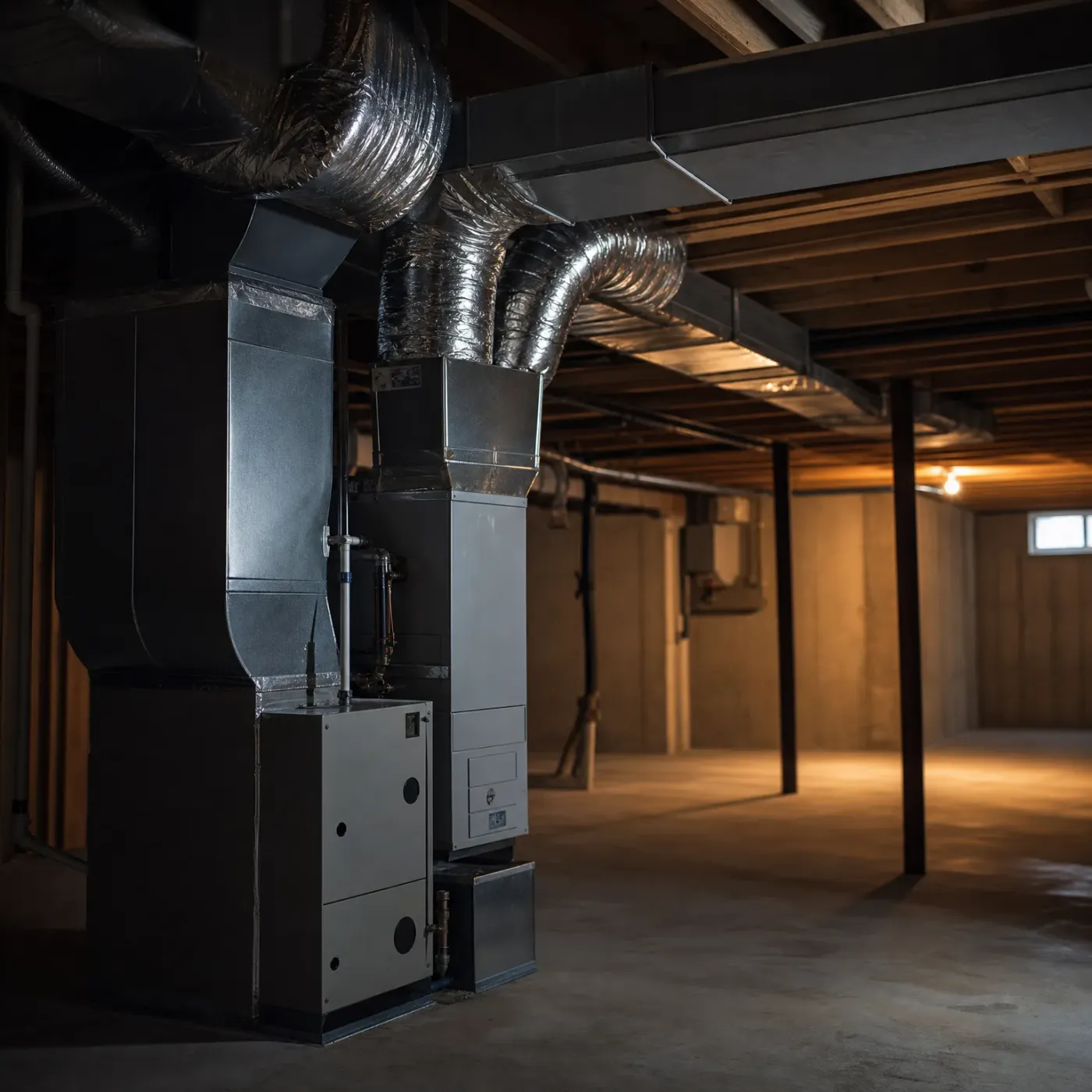
Dry metal, no staining, no smell when the air kicks on. That's what a duct run looks like when nothing's growing in it. The joints are tight and there's no dust streaking down from the seams onto the joists below.
Let someone else find the pro
Mold in Arizona ducts shows up differently than you'd expect in a dry climate, usually tied to a spot where moisture is getting in that shouldn't be: condensation around the coil, a drain line backing up, or air leaking in through a duct run in the crawlspace. This page walks through what to look for and what it means. Once you've sent the form, you're done hunting down who to call and explaining the problem over and over.
Let a pro reach outA musty smell when the air handler kicks on is usually the first thing people notice, followed by dust that looks darker or grittier than normal coming out of the vents. Sometimes there's a visible dark film right at the supply register, or a ring of it just inside the duct if you shine a light in. Arizona's dry air usually keeps mold from spreading through a duct system the way it does in humid places, so when it shows up, it almost always means water is getting in somewhere it shouldn't: a sweating coil, a clogged condensate line, or a leaky duct seam pulling in humid attic or crawlspace air. If anyone in the house has started coughing more, getting headaches, or noticing allergy symptoms mainly indoors, that's worth paying attention to. None of this clears up on its own. The moisture source has to be found and fixed, and the ducts themselves need to be cleaned out before the problem spreads further through the system.

Dry metal, no staining, no smell when the air kicks on. That's what a duct run looks like when nothing's growing in it. The joints are tight and there's no dust streaking down from the seams onto the joists below.

A dark ring around a seam or a damp patch on the insulation means water is getting where it shouldn't. In a dry climate like Arizona's, that almost always traces back to one spot, usually the coil or a low section of duct, and it won't dry out on its own.




Mold needs two things, something to feed on and somewhere damp, and a duct system quietly provides both. The dust that settles inside every duct run is food enough once moisture shows up, and in Arizona that moisture almost always traces back to the air conditioner rather than the weather outside. The evaporator coil is wet the entire time the system runs, so any gap in the cabinet around it, or water that should be draining away but isn't, becomes the starting point. A condensate line that's clogged backs water up into the air handler itself, and that area can stay soaked for days before anyone notices a smell or a stain. Once mold takes hold near the air handler, the blower does the rest, pushing spores through the same ducts that carry the cooled air, which is why a problem that started in one place can turn up at a vent on the other side of the house. Wet insulation on the outside of a duct works the same way, holding moisture long after whatever caused it has been fixed.




At 15.26 cents a kilowatt-hour, running the air conditioner enough to keep humidity down around a leaky duct run adds up fast. A lot of homeowners here cut the thermostat back to save on that bill, and the moisture problem keeps growing in the dark while the duct run sits untouched.
EIA-861 2025 statewide residential average

It's late April, early afternoon, and the light coming through the living room window is already sharp the way it gets before the real heat sets in. You're on the couch and you notice the ceiling vent grille above you has a soft gray edge to it, dust built up along the slats in a way you don't remember from last year. You run a finger along the coffee table underneath and it comes back coated, more than a day's worth. The air handler kicks on and for a second there's a smell under the cool air, something faintly musty, gone almost as soon as you notice it. You look back up at the grille. It's just dust, probably. But you keep looking.
You've probably already noticed one of the signs above, or you're starting to wonder after catching that smell when the air kicks on. Either way, the next step is usually finding someone who can get into the ducts and tell you what's actually growing in there versus what just needs a wipe-down. That part takes time you don't have a lot of extra of in an Arizona summer: looking up duct cleaning companies, calling a few, trying to describe a smell over the phone, then waiting on callbacks and comparing what each one quotes you. None of that makes the duct run any drier while it's happening. Sending this form means one contractor who works on this gets your information and reaches out, instead of you doing the legwork of sorting through a list of strangers. You still have to let someone in to look at it. But the part where you track down who to call, that's off your plate now.
A musty smell when the air kicks on, dust that looks darker than it should, a ring around a register. Those three are the ones worth paying attention to, and all three point to the same thing: moisture sitting somewhere inside the duct system that shouldn't be there. Sometimes it's the coil staying wet longer than it should. Sometimes it's a drain line that's backed up, or a duct run in the crawlspace with a gap letting outside air leak in. Dry metal and tight joints mean the system's clean. Staining around a seam or that smell at the air handler means it isn't, and turning the thermostat down to chase the smell away just makes the air conditioner work harder while the actual problem, the moisture, stays exactly where it was.
None of that tells you which one you're dealing with. That takes someone actually in the duct run, looking at the coil and the drain line and the joints themselves, not guessing from a vent grille. Finding that person is usually the slow part. Most homeowners end up searching contractor listings, calling a few, describing the smell and the staining over again to each one, then trying to compare quotes from people who never saw the same duct run. Once the signs are clear, the next step is getting someone in to confirm what's growing and where it's coming from, and that part doesn't have to involve all the back and forth of finding who to call.

Done looking for a duct system pro