
Signs your air ducts need cleaning in Arizona
Dust coming back fast, a day or two after you've wiped it down, is the clearest sign your ducts need cleaning. Arizona air brings fine dust and dry debris into the house through every gap in the system, and once it settles inside the ducts, your blower keeps stirring it back into the rooms. You may also notice more sneezing or a stuffy feeling indoors than seems right for a closed-up house, or a musty smell when the air handler kicks on. Check the supply vents themselves: if you can see a buildup of gray or brown dust just inside the grille, there's more of it further down the line. Weak airflow from some rooms while others feel fine can mean dust and debris are narrowing the ducts enough to choke off the supply. None of this means the ducts are damaged, only that what's built up inside them has reached the point where it's working against you.


How Dust Builds Up Inside
- A duct system works by pulling air in through the return, pushing it past the blower, and sending it out through the supply runs to each room.
- Dust riding in on that airflow settles on the inside walls of the metal or flex duct, especially at the bends and at the joints where sections connect.
- The return side usually collects more buildup than the supply side, since that's the path pulling house air and whatever is riding on it back toward the blower.
- A heavy coat of dust inside the ducts can block some of the airflow, which makes the blower work to push the same amount of air through a narrower path.
- Flex duct holds onto dust more than smooth metal duct does, because the ribbed interior gives loose particles more surface to cling to.
- Registers and the duct runs right behind them usually show buildup first, since that's where moving air slows down and drops what it's carrying.
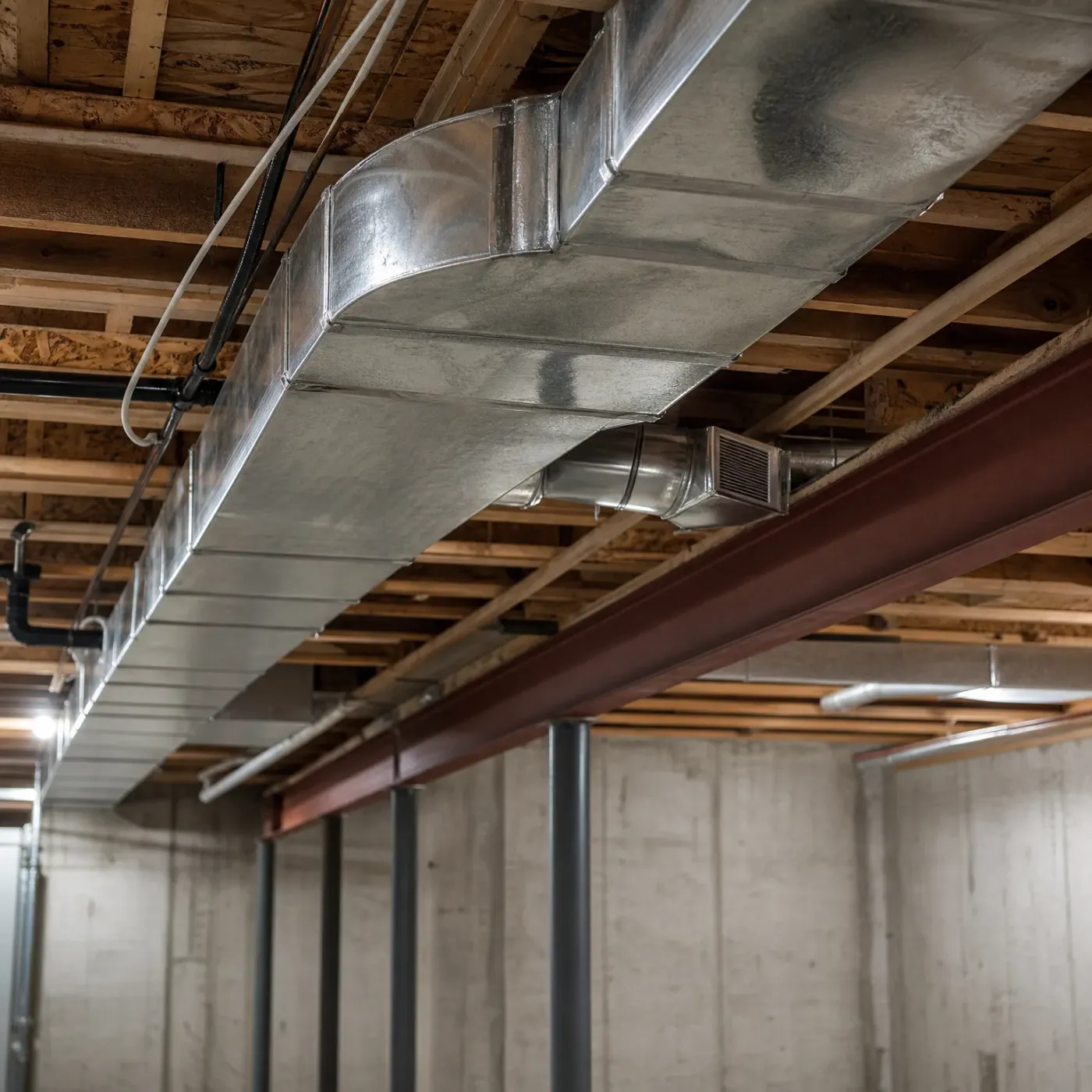
Air comes into the system through the return, moves past the blower, and goes back out through the supply runs to each room. Whatever is riding in that air doesn't all make it to the vent. Some of it settles on the inside walls of the duct, and it settles more at bends and at the joints between sections, where the airflow changes direction and loses a little speed. The return side usually carries the heavier load, since that's the air coming out of the house itself, pulling in whatever dust is already loose indoors before it ever reaches the blower. Once enough of that dust coats the inside of a run, it narrows the path the air has to move through, and the blower ends up working against that narrower space just to push the same volume through the house. The material matters too. Flex duct has a ribbed interior, and that texture gives dust something to grab onto in a way smooth metal duct doesn't, so flex runs tend to build up faster over the same stretch of time. Registers and the few feet of duct right behind them are usually the first place it shows, because that's where the air coming out of the system slows down and drops whatever it's still carrying. If you pull a register cover and see a gray coat lining the inside, that's the same buildup sitting further back in the runs you can't see.




Matched to your ductwork job
Your duct cleaning request goes to one local pro.
Your duct cleaning request goes to a local pro who does this work.
It costs nothing to send, and you don't have to hire anyone.
Clean Your Ducts Now, or Wait?
Clean the ducts now
- Vent covers already have a visible ring of gray buildup, and wiping them clean does nothing to stop the dust feeding back into the room.
- Someone in the house has started sneezing more at home than outside, which points to what's moving through the supply runs rather than seasonal pollen.
- A musty smell shows up when the system first kicks on after sitting off for a while, which means something is sitting in the duct itself.
- Dust shows up on furniture again within a day or two of cleaning, faster than normal settling would explain.
- One or two rooms get noticeably less airflow than the rest of the house, which can mean a blocked or collapsed section of duct.
Hold off for now
- Vent covers stay mostly clean between your regular dusting, with no gray film building up around the edges.
- Airflow feels even from room to room, with no single vent noticeably weaker than the others.
- Dust on surfaces builds up at the same slow pace it always has, with no sudden jump after you clean.
- Nobody in the house has new or worsening allergy symptoms tied to time spent indoors.
- No musty or stale smell comes through the vents when the system starts up after being off.

Technician inspects each supply and return vent first.
A camera checks inside the main trunk line for buildup.
Vents are sealed off so dust can't escape into rooms.
A vacuum system pulls air through the ductwork under negative pressure.
Power costs 15.26 cents per kilowatt-hour statewide
At 15.26 cents a kilowatt-hour, every extra degree your blower has to push air against costs you directly. Clogged ducts make the blower run longer to move the same air through your house, and that shows up on the bill before you ever see the dust.
EIA-861 2025 statewide residential average

Where the dust actually piles up
The bends in your ductwork near the blower and the first few feet of trunk line coming off it collect more dust than straight runs do. Air slows down at each turn, and whatever it's carrying drops out of the stream and sticks to the duct wall. Over time that buildup narrows the path, so the blower has to push harder to move the same amount of air through your house.

What a dirty filter won't catch
Your filter only screens air as it enters the system through the return. Dust that's already settled on the duct walls stays put until airflow or a cleaning disturbs it, no matter how often you swap the filter. That's why a new filter and clean vent covers don't stop the gray film from coming back. The dust causing it isn't in the filter at all. It's sitting further back in the ducts themselves.

If the dust keeps coming back, the ducts are why
You've got what you need now to check your own house. Wipe a shelf down, watch how fast the dust comes back, look at the vent covers for that gray ring. If it's happening, the dust is riding the air coming out of your ducts, not just blowing in off the desert.
A contractor who works on duct systems in Arizona homes all year knows which bends collect the most buildup and what a camera will show before it even goes in. When you send in your information, it goes to one licensed contractor local to your area, not several competing for your call, and that contractor will reach out to look at your specific system and tell you where you stand.



A duct system pro near you
A local contractor who cleans ducts in Arizona homes all year knows what that fine dust does to a system and where it tends to build up worst. Getting matched means one licensed contractor reaching out to look at your ducts, not several companies calling to compete for the job. If the dust test and the vent covers point to buildup inside your ductwork, that's the next step: someone who works on this equipment regularly taking a direct look at your house.
Your request goes to one pro, not a list of companies.
No charge to send it. You decide if you hire them.