Dew point near 55°F
A supply duct running near 55°F in a humid attic space is cold enough to sweat once insulation wrap has gaps or has slipped.

Sweating vents mean warm, moist air is touching cold metal somewhere in your ductwork. Inside the duct, air conditioned to a cold temperature is passing through; outside, your home's air is humid enough that it condenses on contact, the same way a cold glass of water beads up on a hot day. In Arizona, the outside air in your house usually isn't that humid, so when it happens here it almost always points to insulation that's missing, torn, or has come loose from the duct, leaving bare metal exposed to room air. It can also mean a duct is undersized or blocked, forcing air inside it colder than it should run. Left alone, that moisture can soak into drywall or insulation around the duct and lead to staining or mold. It's not a sign your air conditioner is broken, but it is a sign that air escaping or ducts running too cold needs a look.


A duct is only supposed to carry cold air, not show it. When a seam opens up or a flex connection pulls loose, air at supply temperature meets the warmer air sitting in the attic or crawlspace around it, and that contact is where the trouble starts. Arizona attics run hot, but they aren't always dry in the way people assume. Once a duct starts losing air through a gap, it pulls in whatever's nearby, and if that space is humid enough, the metal around the leak drops to a temperature where moisture has nowhere to go but onto the duct itself. Bare metal makes this worse. Any spot where insulation has slipped or was never wrapped tight is the coldest point on the run, so it's usually the first place you'll see a wet patch or a drip stain on the ceiling below it. Airflow matters too. A dirty filter or a blower that's lost strength means less air is moving past that cold spot, so it stays cold longer instead of warming back toward room temperature the way it should when the system is working right. And location plays a part. A vent near a kitchen running steam, or a room with a humidifier, is going to sweat sooner than a vent on the other side of the house, because the air right around it is already carrying more moisture to begin with.




A supply duct running near 55°F in a humid attic space is cold enough to sweat once insulation wrap has gaps or has slipped.
A single torn seam can drop a vent's surface temperature enough to sweat, even if every other run in your attic stays dry.
Look at the vent cover itself. You'll see water beaded on the metal, or a damp ring on the ceiling or wall around it. Sometimes it shows up as a dark stain first, before you ever see the water. Touch it and the metal feels cold, colder than the air coming out should leave it. If it's been going on a while, you might smell something musty near that register, or find the drywall around it starting to soften. Left alone, that moisture doesn't stay put. It soaks into drywall and insulation, and gives mold something to grow on, right where your household breathes.

This is what a dry run looks like. The condenser sits on its pad, disconnect box mounted and wired clean, nothing blocking airflow around it. Warm air outside never meets cold metal inside, because the ducts stay sealed and wrapped the way they were built.

Leaves piling against a dirty, aged unit like this often mean the rest of the system has gone just as long without a look. Seams loosen, wrap slips, and humid air finds its way to the cold duct surface somewhere inside the house. A local contractor who services units every summer can trace it to the exact seam and reseal it, rather than you guessing room by room which vent is sweating and why.
At 15.26 cents a kilowatt-hour, an AC already working to cool your home can't afford to lose cold air through a leaky duct. That air you're paying for is also what's sweating your vents, so the leak costs you twice: once on the bill, once in the repair it's pointing to.
EIA-861 2025 statewide residential average
If the sweating is only around one vent and you can see a gap in the foil wrap or a seam that's come loose, you can press the insulation back down or tape a seam yourself. That stops the sweating if the duct itself is sound underneath. It's worth a look before anything else, since it costs you nothing but a few minutes with a flashlight. But if the metal is still cold to the touch after you've patched what you can see, or the sweating keeps coming back in the same spot, something past the surface is wrong.
A torn flex duct, a seam that's separated inside a wall, or insulation that's slipped off a long run of ductwork isn't something you can see or reach from inside the house. A local contractor who works on Arizona attics every summer knows where these ducts tend to fail first and can get into the space to check the whole run, not just the vent you noticed. One contractor means one visit and one answer, instead of calling around and explaining the same damp ceiling stain to several companies before anyone looks at it.


Your request goes to one pro, not a list of companies.
Sending the form costs nothing.

Summer air here holds more moisture than it feels like it should. Averaged across June, July and August, the dew point in Arizona runs 47°F, according to NOAA climate data. That's dry compared to a lot of the country, but it's not zero, and your ducts don't need much more than that to sweat once cold air is leaking into a hot attic. A duct surface running near 55°F will still condense moisture out of attic air sitting at a 47°F dew point. That's the gap doing the damage, not some rare humid spell.
NASA POWER T2MDEW county cells weighted by homes
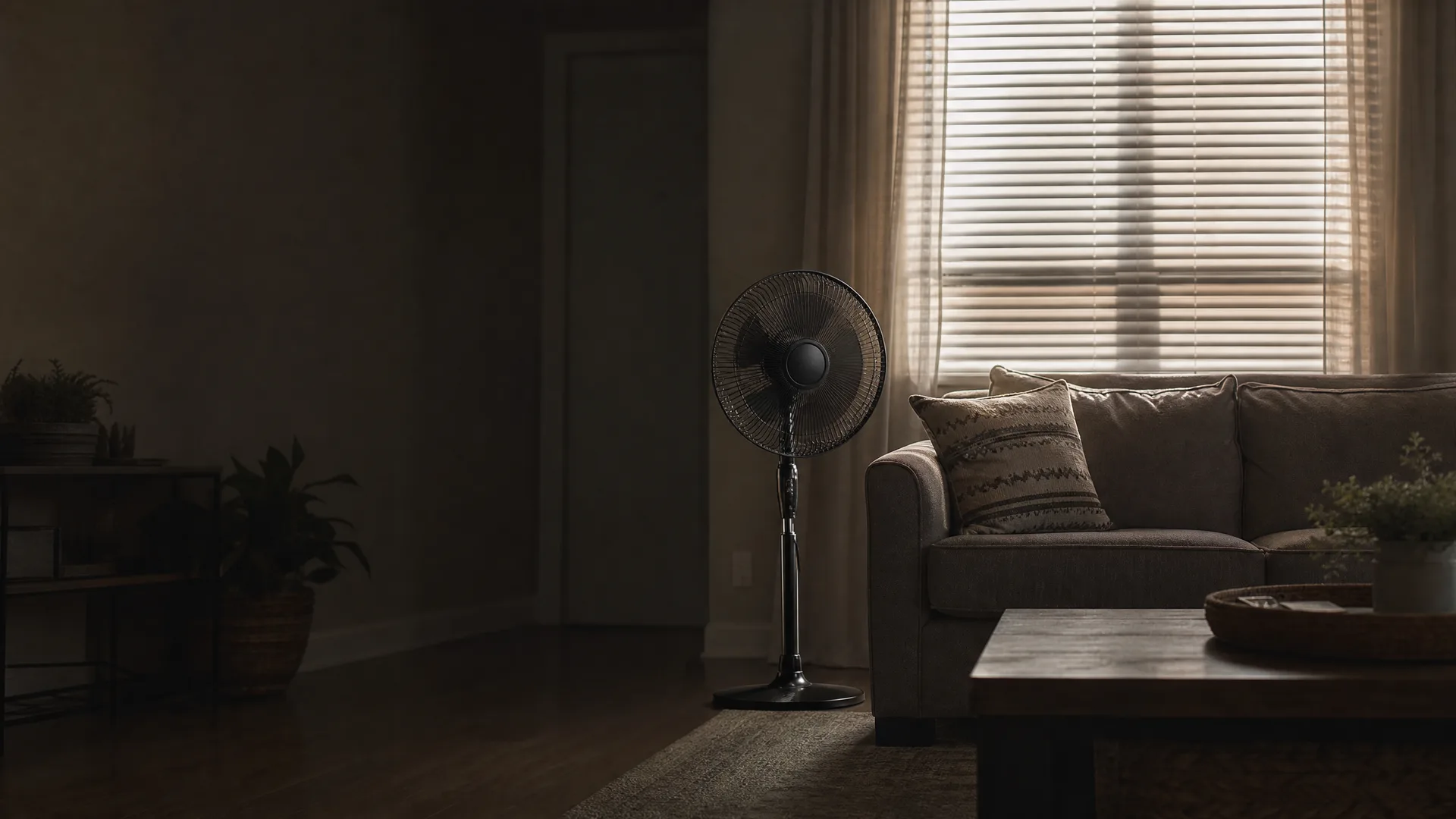
It's just past two and the sun's flat against the blinds, lighting them up without getting through. You've got them shut tight on the west side where the glare comes in worst. The floor fan next to the couch is on its highest setting, pointed at your kid doing homework with a popsicle melting faster than he can finish it. You get up to check the thermostat, see it's holding where you set it, and on your way back you notice the vent above the hallway has a dark ring forming around it, the paint gone soft and discolored. You touch it without thinking. It's wet.

Sweating vents mean cold air is getting out of your ducts before it reaches the room, and humid air is getting in around the gap to replace it. A seam that's come apart, a wrap that's slipped, insulation that's gone thin in one spot. Whatever the cause, a licensed contractor can find it, seal it, and confirm the vent stays dry once the system runs again.
You could spend an afternoon calling around, telling each company the same thing about the damp ring on your ceiling and the water beading on the vent cover, then sit with a stack of quotes trying to tell which one actually knows ductwork. Or you can put in one request and have a local contractor who works on this kind of leak all summer come look at the actual duct in your actual attic. Either way the vent needs to be fixed. One way, you're not the one chasing it down.



A sweating vent usually means a duct seam or a torn wrap, and that's a job for someone who can get into your attic or crawlspace and seal it right, not retape it every summer. Submit your request and it goes to one licensed Arizona contractor who deals with this kind of leak all season, not a batch of companies competing for your callback. You skip the searching, the explaining the problem over and over, and the sorting through quotes. You talk to one person who already knows what's likely wrong before they show up.
The pro who reaches out is licensed in Arizona.
You're not committing to anything by asking.
