
Why your vents smell musty in Arizona

After this form, you can stop searching for a duct system pro.

Duct and vent cleaningDucts or ventsArizona
Step 1 of 2

What ZIP code is the job in?

A musty smell from your vents almost always means moisture sitting somewhere in the duct system, usually around the evaporator coil where the air conditioner pulls humidity out of the air before it ever reaches a room. In Arizona that water has nowhere to go fast because the air outside is so dry, and if the drain line is slow or the coil stays damp between cooling cycles, mold and mildew get a foothold right where your air passes through. Dust sitting in the ducts holds that moisture longer and feeds the smell. It can also mean a dead rodent or stagnant water pooled in a duct run that rarely gets disturbed. Either way, the smell is coming from inside the system, not the room itself, and opening a window or running an air freshener will not touch it. Cleaning the ducts and coil removes what is actually causing the odor instead of covering it up for a few hours.

Unfinished basement with bare concrete floor and walls, exposed wood joists, large galvanized sheet-metal ductwork, PVC and copper piping, and a gray furnace unit beside wood stud framing.

Clean, dry duct run

This is what a duct system looks like when condensate drains the way it should. The drain line carries water away from the coil instead of letting it sit, and the sheet metal stays dry all the way across the ceiling. Air moving through here picks up nothing on its way to the vent.


Basement ceiling with large galvanized sheet-metal ductwork, round metal pipes and plumbing lines running beneath wood joists, above a bare concrete wall and floor.

Trapped moisture overhead

Water staining on the foundation wall means moisture has been sitting somewhere in this system longer than a day or two. Once it settles into the ducts or the joists around them, every cycle of the air conditioner pushes that smell into the rooms below. Cleaning the ducts clears out what dried there and what hasn't.

Is it just the vents, or does the whole house smell this way

Walk from room to room and check if the smell is worse right under a vent or spread evenly through the house. If it's strongest at the vent, that's air coming straight off a wet coil or a damp stretch of duct. You might notice it more when the AC first kicks on, then it fades as the air keeps moving. Some households notice it mainly in rooms that sit closed off most of the day, like a guest room or an office, where stale air has time to settle. Left alone, that moisture sitting in the ductwork doesn't just smell bad. It's the kind of damp spot mold grows on, and once it's established in the ducts, cleaning the coil alone won't get rid of it.

Galvanized sheet-metal ductwork and round pipes running along an exposed wood-joist ceiling with insulation, above a furnace unit beside a blank painted wall.

Why dry air doesn't stop it

Arizona's dry air outside doesn't reach the coil. The air conditioner pulls moisture out of the air inside your house every time it runs, and that water collects on the coil before it drains away. A long, hot summer means the system runs for hours most days, so the coil stays wet most of the time it's on, no matter how low the humidity is outside the ducts.

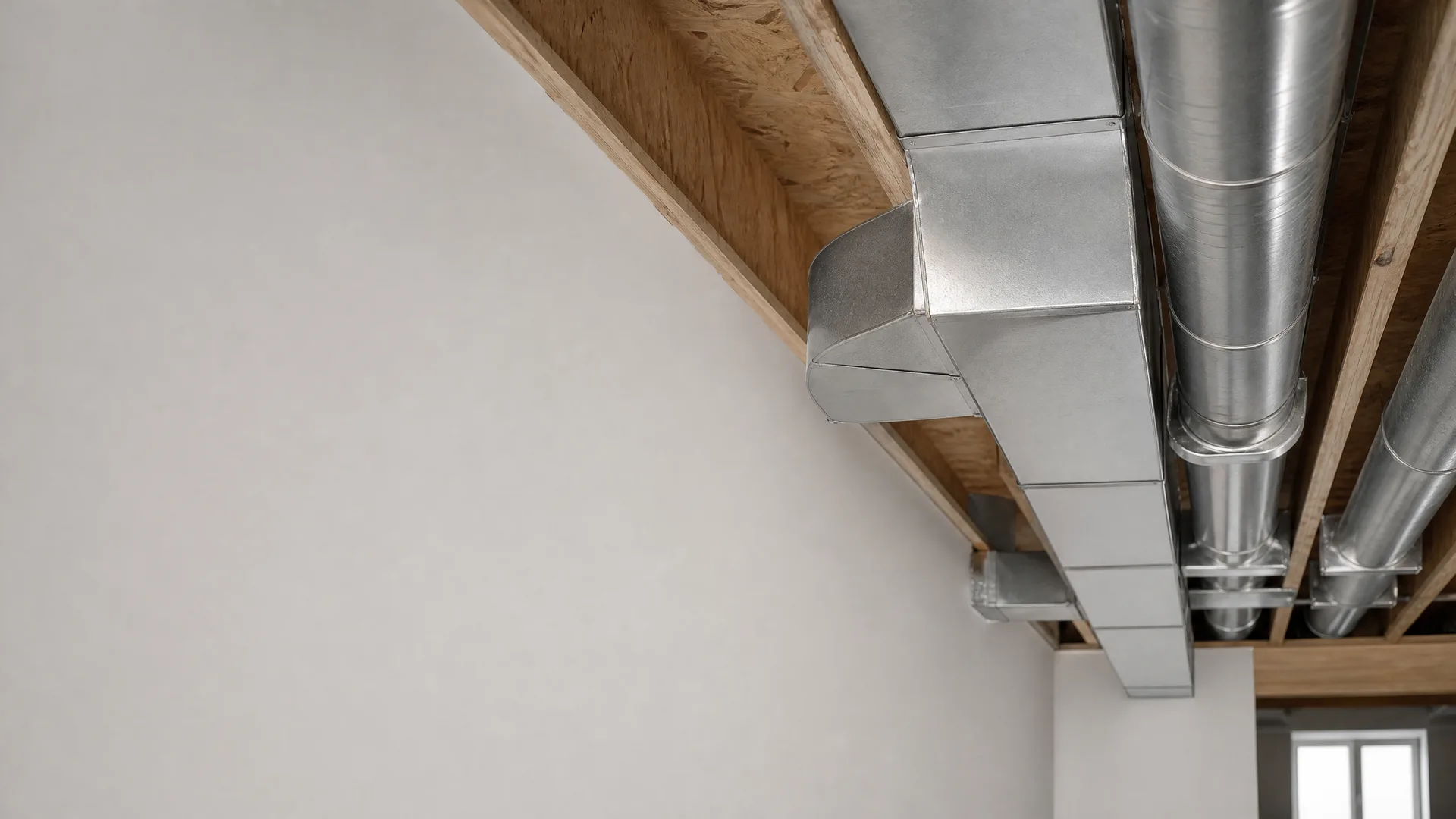
Galvanized rectangular and round sheet-metal ductwork mounted beneath an exposed wooden joist and OSB ceiling, next to a plain white wall and a window at lower right.

Dust turns a damp coil worse

Dust and debris pull into the return side of the duct system and settle wherever there's moisture to hold onto. On a coil that stays damp, that dust doesn't just sit there, it feeds mold growth and holds the smell against the metal. Cleaning removes the dust along with it, which is why clearing the ducts out does more than a new filter or a thermostat setting ever will.

Clean It Now or Wait It Out

Clean the ducts

  • A contractor can reach the coil, the drain pan and the runs near it and clear out what's actually holding the smell, not just mask it.
  • If the drain line has algae or sludge slowing it down, cleaning can address that along with the ductwork in the same visit.
  • You get a look at whether the smell is standing water, mildew on insulation, or something growing on the coil itself, instead of guessing.
  • Once the moisture source is cleared out, the smell generally doesn't come back on its own in the following weeks.
  • A local contractor who services Arizona systems all summer knows where water tends to collect in this climate and checks there first.
  • It takes care of the problem instead of covering it, which matters if you're someone who'd rather deal with a small issue now.

Wait and see

  • The smell usually doesn't go away by itself, since the moisture causing it keeps building every time the air conditioner runs.
  • Mold and mildew spread the longer they sit on a damp coil or in wet insulation, so the problem tends to get worse, not better.
  • A clogged or slow drain line left alone can eventually back up and cause water damage near the air handler.
  • Running air fresheners or vent deodorizers only covers the smell temporarily and does nothing about the water sitting in the duct system.
  • The longer standing water sits, the more of the duct surface it can reach, which can turn a small patch into a larger cleaning job later.
  • Arizona summers run long, so a system left unaddressed in June is still pulling moisture out of the air in September.
A smiling man in a dark green sweater sits at a wooden table with a light gray mug in a kitchen with white tile backsplash, pendant lights, and an adjoining living room visible.
A smiling man in a dark gray sweater stands indoors looking to the side, with a kitchen counter holding a ceramic mug and open wooden shelves behind him and a living area in the background.
A smiling man in a dark blue button-up shirt stands at a white kitchen island, with open shelving, a gas range, a potted plant and a window in the background.
A smiling man with dark wavy hair and a beard, wearing a dark green knit sweater, sits in an open-plan living room and kitchen with a brown sofa, large windows, and a counter holding a mug and a wooden bowl.

Let someone else find the pro

A musty smell doesn't go away on its own, and running the air conditioner harder just pushes more damp air past whatever is holding the smell. Someone who services ducts and coils in Arizona all summer has seen what a long run of hot, dry weather does to a drain line and a coil that sits wet for months at a stretch. They know where sludge builds up in a drain pan here and what a coil looks like after a full season of pulling moisture out of the air. Send the request and a local, licensed contractor gets it, the one who'll actually show up and look at your system, not a handful of companies competing for the job. That smell is worth tracking down now, before another few months of summer heat give it more time to spread through the ducts and settle into the rest of the house.

You keep the thermostat set the same way all summer and never think about what's happening at the coil. The smell gets written off as "just the AC" instead of a sign that water is sitting somewhere it shouldn't.

You notice the smell the first week it shows up and want the duct system looked at before it spreads past the vents into the rest of the house. That's the difference between a quick cleaning and a problem that's had all summer to set in.

Power costs 15.26 cents per kilowatt-hour statewide

Electricity here runs 15.26 cents per kilowatt-hour, close to the national average. Your air conditioner already runs long hours to keep up with a dry Arizona summer, and a dirty coil or clogged drain makes it work harder to move the same air. Clearing that buildup is one less thing adding to the bill.

EIA-861 2025 statewide residential average

Where the smell actually starts

  • A musty smell means moisture is sitting at the coil, the drain pan, or a damp stretch of duct, not something you can air out.
  • The smell doesn't fade on its own, because the coil stays wet every time the air conditioner runs through another hot Arizona summer.
  • Cleaning the coil and the drain line removes the source instead of covering the smell up for a few days.
  • A local contractor who services ducts and coils through Arizona summers knows which part usually holds the water and checks there first.
  • One contractor takes the job, so you hear from a single licensed tech instead of fielding calls from several companies.
  • Once the request is sent, finding that contractor stops being something you have to manage yourself.

The musty smell coming through your vents traces back to water sitting where it shouldn't, usually at the coil or the drain line underneath it. Arizona's dry air outside never touches that spot. The coil stays wet every time the air conditioner runs, and a summer of long runs gives that moisture plenty of chances to settle into the ductwork instead of draining away clean. Airing out the house doesn't reach it. Running the system harder doesn't either, since that just pushes more air past the same damp coil. The only way the smell goes away is removing the water and whatever has started growing in it, which is what a coil and duct cleaning is for.

A contractor who handles this kind of work in Arizona through the summer has seen the pattern enough times to know where to look first. The drain pan, the coil fins, a low spot in a duct run near the air handler, these are the places that hold water in a house with your setup, and someone who services this equipment all season checks them in that order instead of guessing. You send one request and it goes to one licensed contractor working near you, not a batch of companies competing for the call. That means a single tech shows up knowing the job, not a string of callbacks to sort through. From here, finding that person is off your plate. The smell has a cause, the cause has a fix, and the part you were handling alone is the part that just moved off your desk.

A dark wood cabinet with a drawer and black knob holds a ceramic vase of green leafy branches and a wooden bowl, beside a window with a woven basket of knit blankets.
Sunlit interior corner with white baseboard molding, cream walls, a wood floor, a woven jute rug, and a potted green plant on a window sill with trees visible outside.
Sunlight falls across a marble countertop by a window, where a small stone bowl with pebbles sits beside a potted pothos plant in a ceramic planter and a folded beige towel.
Exterior corner of a house with lap and shingle-style siding, a white gutter and downspout with offset elbows, a stone veneer base, a window at right, and flowering hydrangea shrubs at lower left in warm low-angle light.
A wooden console cabinet with a caned front holds a ceramic vase of green leafy branches and a shallow wooden bowl, below a framed landscape print on a beige wall beside a curtained window.

One request and it's handed off

Only one pro gets your request, so you hear from one company.

Reach a local pro

No fee to send it, and nothing to sign.