Mini Split Installation in Phoenix, AZ
A new system here will heat from November through March and cool from April through October every year. Tell us about the house, and a licensed contractor who covers Maricopa County will get in touch.
Tell us about the job
It takes about a minute.
A mini-split here works most of the year
Phoenix asks a mini-split to run almost every month of the year. Summer afternoons average 103°F from April through October, seven months of the unit pushing hard to cool the house. Winter is short and mild by comparison. Nights average 41°F from November through March, enough to call for heat most evenings even if the days stay warm.
A new unit sold today has to clear federal minimums either way, 14.3 SEER2 for cooling and 7.5 HSPF2 for heating. With cooling running seven months here and the heat staying mild, the cooling side of that rating is the one you'll notice most.
- 5 months
- November through March, your system heats
- 7 months
- April through October, it cools
- 41°F
- the average winter night it heats against
- 103°F
- the average summer afternoon it cools against
NOAA nClimDiv, 1991–2020 normals
Arizona requires HVAC contractors to hold a state license.
Arizona licenses HVAC contractors through the Registrar of Contractors. That license belongs to the contractor, not to the job, so the same license that covers your mini-split installation covers whatever other HVAC work that contractor takes on.
In most cities and counties, installing a mini-split needs a permit from the local building office, with an inspection once the work is done. That inspection checks the installation at your address. The state license is what stands behind the contractor doing the work.
Sources: Arizona State Legislature · Arizona Registrar of Contractors
- Is a mini split worth it?
- For the right room or house, yes. A mini split heats and cools without ducts, so a contractor can put one in a room that never gets comfortable or use several to cover a whole home. Summer afternoons here average 103°F, and a mini split handles that heat the same way a central system does, by moving heat instead of making it. Whether it makes sense for your house depends on what you already have and what you are trying to fix, and a contractor can walk through that with you.
- How many rooms can a mini split cover?
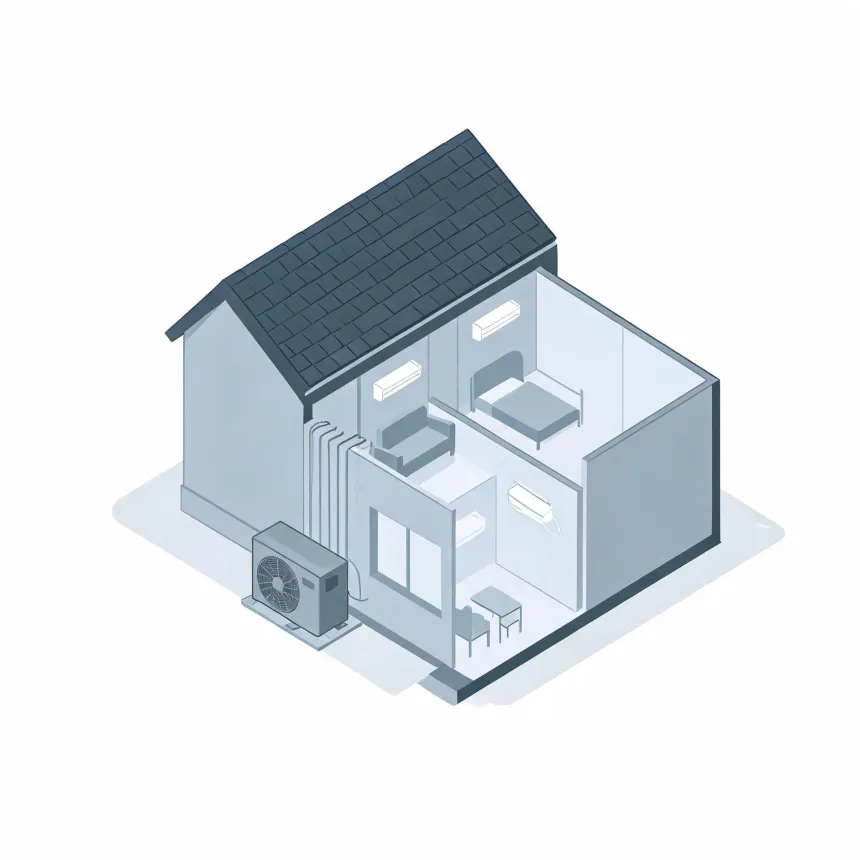
- One outdoor unit can run more than one indoor head, so a mini split can cover several rooms at once. A single-zone system heats and cools one room or open area. A multi-zone system runs several indoor heads off one outdoor unit, so a contractor can put one in a bedroom, another in a living room, and another down the hall, each running on its own. How many a given outdoor unit can support depends on its capacity and on how much heating and cooling each room needs, which is something a contractor works out room by room.
- Can a mini split heat a whole house?
- Yes, with enough indoor heads placed and sized for the house. A mini split is a heat pump, so it heats as well as it cools, and winter nights here average 41°F, well within what a heat pump handles. Covering a whole house means running one outdoor unit to multiple indoor heads, or in some cases more than one outdoor unit, so every room has its own source of heat. A contractor sizes the system to the house rather than fitting the house to a standard size.