Mini Split Installation in Tucson, AZ
A new system here will heat from November through March and cool from April through October every year. Tell us about the house, and a licensed contractor who covers Pima County will get in touch.
Tell us about the job
It takes about a minute.
A mini-split here works most of the year
In Pima County a mini-split earns its keep almost every month. Summer afternoons average 99°F, so from April through October the unit is on cooling duty for seven months straight. Then winter nights average 38°F, and from November through March it switches to heat for the other five. That leaves it running in one mode or the other all year.
Because it covers both jobs, the equipment matters more than it would somewhere that only cools or only heats. Any mini-split made from 2023 on has to meet 14.3 SEER2 for cooling and 7.5 HSPF2 for heating, and in a climate that asks for both, those numbers get tested in both directions, not just one.
- 5 months
- November through March, your system heats
- 7 months
- April through October, it cools
- 38°F
- the average winter night it heats against
- 99°F
- the average summer afternoon it cools against
NOAA nClimDiv, 1991–2020 normals
Arizona requires HVAC contractors to hold a state license.
Arizona licenses HVAC contractors through the Registrar of Contractors. That license is held by the contractor, not issued per job, so the same license covers this mini-split install as any other work that contractor takes on.
For this job, the license is what stands behind the person doing the work. On top of that, most cities and counties in Arizona require a permit from the local building office for an installation like this, with an inspection once the work is done. The inspection checks the installation itself, separate from whatever the license already says about the contractor.
Sources: Arizona State Legislature · Arizona Registrar of Contractors
- Is a mini split worth it?
- For the right room or addition, yes. A mini split cools in summer and heats in winter from the same unit, which matters here with 7 months of cooling and 5 months of heating. It works well for a room that never gets even air from the main system, or a space added on after the ductwork was already in place. Whether it makes sense for your whole house is a different question, and a licensed contractor can walk through your rooms and tell you what fits.
- How many rooms can a mini split cover?
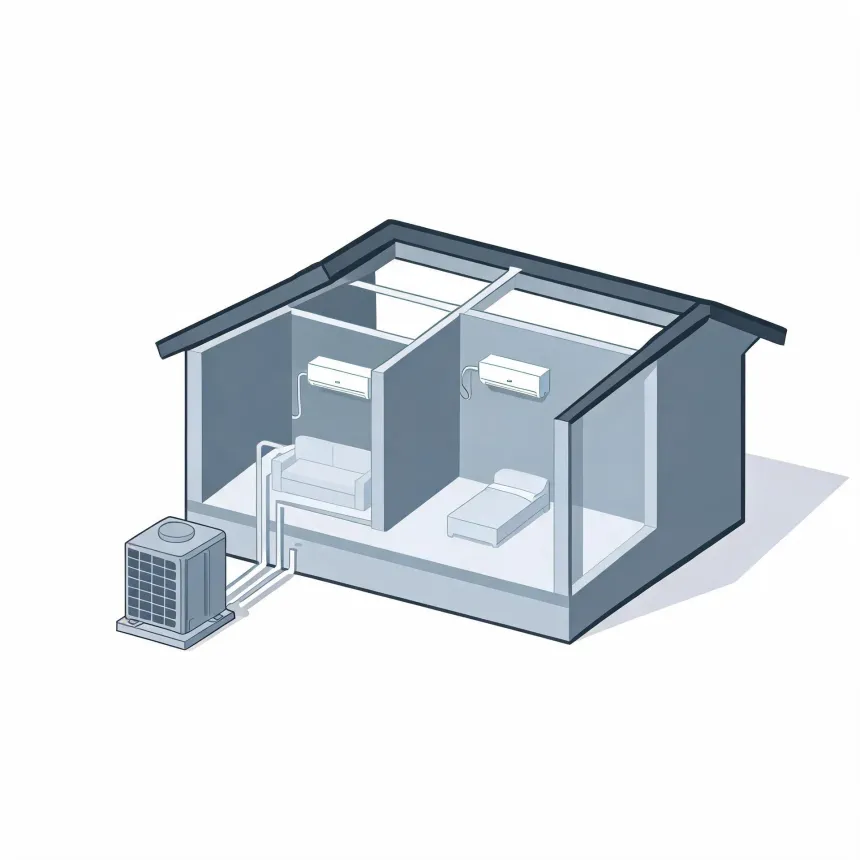
- More than one, depending on the outdoor unit. Some outdoor units run a single indoor head, others run several, and each indoor head handles one room or open area on its own. The more heads on one outdoor unit, the more its total capacity gets divided between them, so a contractor has to size the system around the rooms you actually want conditioned.
- Can a mini split heat a whole house?
- It can, if enough indoor heads are placed to reach every room and the outdoor unit is sized for the whole house's heat loss. Winter nights here average 38°F, so the system has to be sized for that low, not just for a mild evening. A contractor can look at your floor plan and tell you how many heads it would take and where they would need to go.