Mini Split Installation in Prescott Valley, AZ
A new system here will heat from October through April and cool from June through September every year. Tell us about the house, and a licensed contractor who covers Yavapai County will get in touch.
Tell us about the job
It takes about a minute.
In Prescott Valley, a mini-split works nearly all year
Your mini-split will run eleven months out of the year here. Heat from October through April, seven months, as winter nights average 31°F. Cooling from June through September, four months, when summer afternoons reach 93°F. Only one month is left where it can rest.
A new unit sold today has to meet the federal minimum for split-system heat pumps, 14.3 SEER2 for cooling and 7.5 HSPF2 for heating. That minimum applies to a ductless mini-split the same as any other split system. With this much of the year riding on it, the install matters as much as the equipment. It has to be sized for a 31°F morning and a 93°F afternoon both, not just the one that comes to mind first.
- 7 months
- October through April, your system heats
- 4 months
- June through September, it cools
- 31°F
- the average winter night it heats against
- 93°F
- the average summer afternoon it cools against
NOAA nClimDiv, 1991–2020 normals
Arizona requires HVAC contractors to hold a state license.
The license comes from the Arizona Registrar of Contractors, and it belongs to the contractor, not to this job. The state tested this contractor and keeps a record of them, separate from whatever install shows up on their schedule.
That record is what stands behind the contractor you hire for this mini-split. The check on the install itself comes from your local building office, which in most cities and counties in Arizona requires a permit for this kind of work and an inspection once it is done.
Sources: Arizona State Legislature · Arizona Registrar of Contractors
- Is a mini split worth it?
- It depends on what you're heating or cooling and what's there now. A mini split makes sense for a room addition, a garage, or a house that relies on window units or electric baseboard, because it heats and cools that space directly without ductwork. Prescott Valley homes need heat from October through April and cooling from June through September, so the unit runs most of the year here. If your home already has ducted heating and cooling in good shape, a mini split usually gets added for a specific room rather than replacing the whole system.
- How many rooms can a mini split cover?
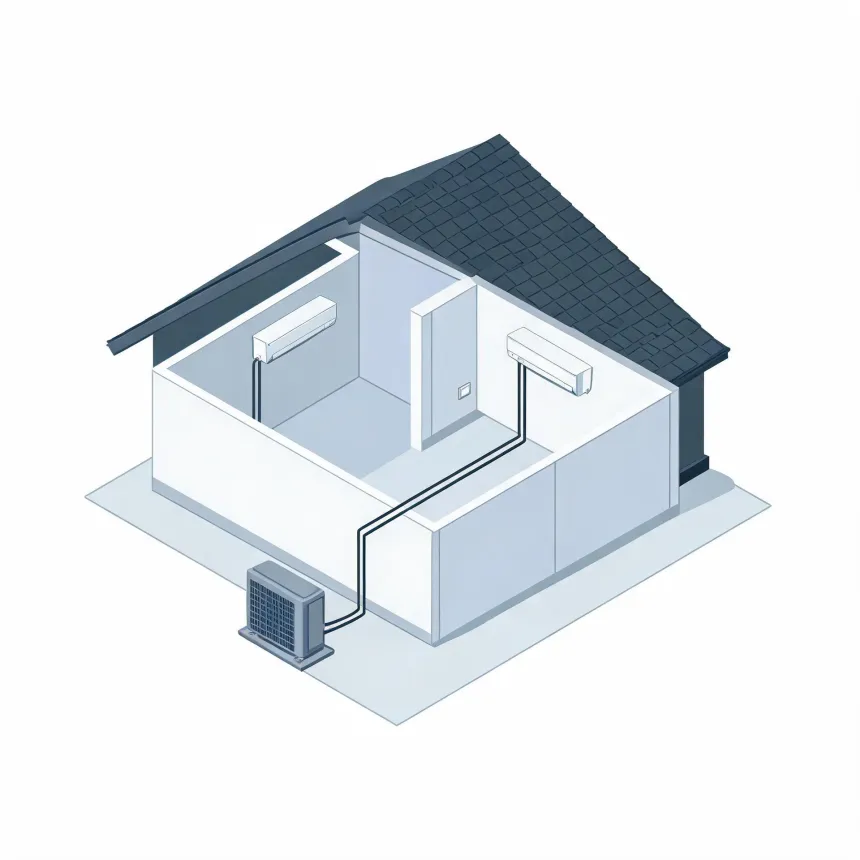
- A single outdoor unit can run one indoor head or several, depending on the system. Multi-zone systems let each indoor head control its own room, so the number of rooms covered comes down to how many heads the outdoor unit supports. The tradeoff is that the more zones running off one outdoor unit, the less heating or cooling capacity is left if several rooms call for it at once. A contractor can size the system to the rooms you want covered and the layout of your house.
- Can a mini split heat a whole house?
- A mini split can heat a whole house if it's sized and placed for that, but most installations cover specific rooms or additions rather than the entire home. Whole-house coverage means an indoor head in every room that needs heat, which takes planning around your floor plan and how heat moves between rooms. Winter nights here average 31°F, so the system has to be sized for that low, not just for a mild day. A contractor can tell you whether your home's layout works for whole-house coverage or whether it's better paired with existing ducted heat.