Mini Split Installation in Clifton, AZ
A new system here will heat from October through April and cool from June through September every year. Tell us about the house, and a licensed contractor who covers Greenlee County will get in touch.
Tell us about the job
It takes about a minute.
Clifton asks a mini-split to work most of the year
A mini-split in Clifton spends 11 months a year heating or cooling your home. Winter nights average 29°F from December through February, cold enough that the heat pump side runs hard to keep up. Summer afternoons average 88°F, which puts the compressor to work June through September. The other seven months, October through April, the same unit has to supply the heat.
Any new mini-split installed now has to meet the federal minimum for split-system heat pumps, 14.3 SEER2 for cooling and 7.5 HSPF2 for heating. A ductless system counts as a split system under that standard. There is no lower bar for a wall-mounted unit than for one tied to ducts.
- 7 months
- October through April, your system heats
- 4 months
- June through September, it cools
- 29°F
- the average winter night it heats against
- 88°F
- the average summer afternoon it cools against
NOAA nClimDiv, 1991–2020 normals
Arizona requires HVAC contractors to hold a state license.
The license is held by the contractor, not issued job by job. The Registrar of Contractors tests and keeps a record of the person or business doing the work, so the same license covers this mini-split install and whatever else that contractor takes on next.
In Greenlee County, installing a mini-split typically needs a permit from the local building office, with an inspection once the work is finished. That inspection is separate from the state license and checks the installation itself, not the contractor's standing.
Sources: Arizona State Legislature · Arizona Registrar of Contractors
- Is a mini split worth it?
- For most homes here, yes, especially in a room that never gets comfortable through the rest of the house's ductwork. Clifton needs heat from October through April and cooling from June through September, so a system that handles both jobs is working nearly all year. A mini split puts heat or cooling right where you need it, without losing anything to ducts along the way. Whether it makes sense for your whole house or just one problem room is worth having a contractor look at.
- How many rooms can a mini split cover?
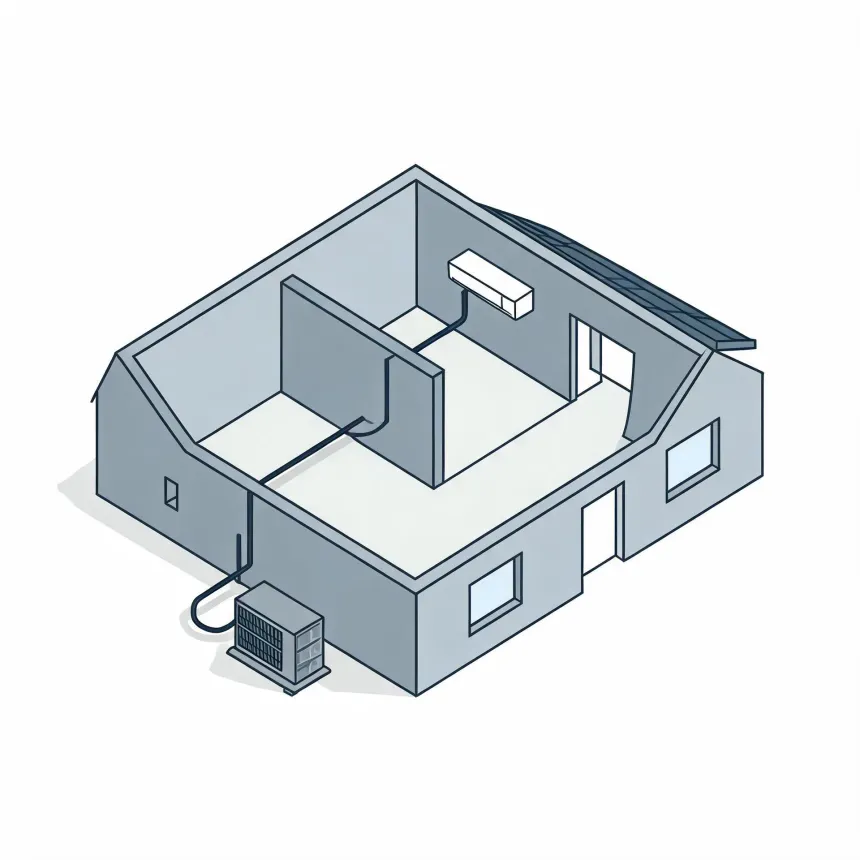
- A single outdoor unit can run several indoor heads, the exact number depends on the system and the manufacturer. Each indoor head is sized to the room it serves, so a contractor matches the number of heads and their capacity to your rooms and how they're laid out. Add too many rooms to one outdoor unit and each head has less capacity to work with on the coldest or hottest days. That's why a room by room load calculation matters more than a general rule of thumb.
- Can a mini split heat a whole house?
- It can, if enough heads are placed to reach every room, but winter nights here average 29°F, so the system has to be sized for that cold, not just for a mild day. A mini split heat pump keeps working in cold weather because it's built for both heating and cooling, unlike a straight air conditioner. The question is whether enough indoor heads, correctly placed and sized, can cover the whole floor plan. That's a room by room calculation a contractor needs to do for your house specifically.