
AC Maintenance in Clifton, AZ
Air conditioners here run from June through September, so May is the time for a tune-up. Tell us about your system, and a licensed contractor who covers Greenlee County will get in touch.
Tell us about the job
It takes about a minute.

Four months of heat, every year, on the same system
Clifton asks a lot of an air conditioner in a short window. June through September, afternoons average 88°F, and the system has to keep up with that heat day after day. The rest of the year it mostly sits still, then has to start up strong again once June comes around.
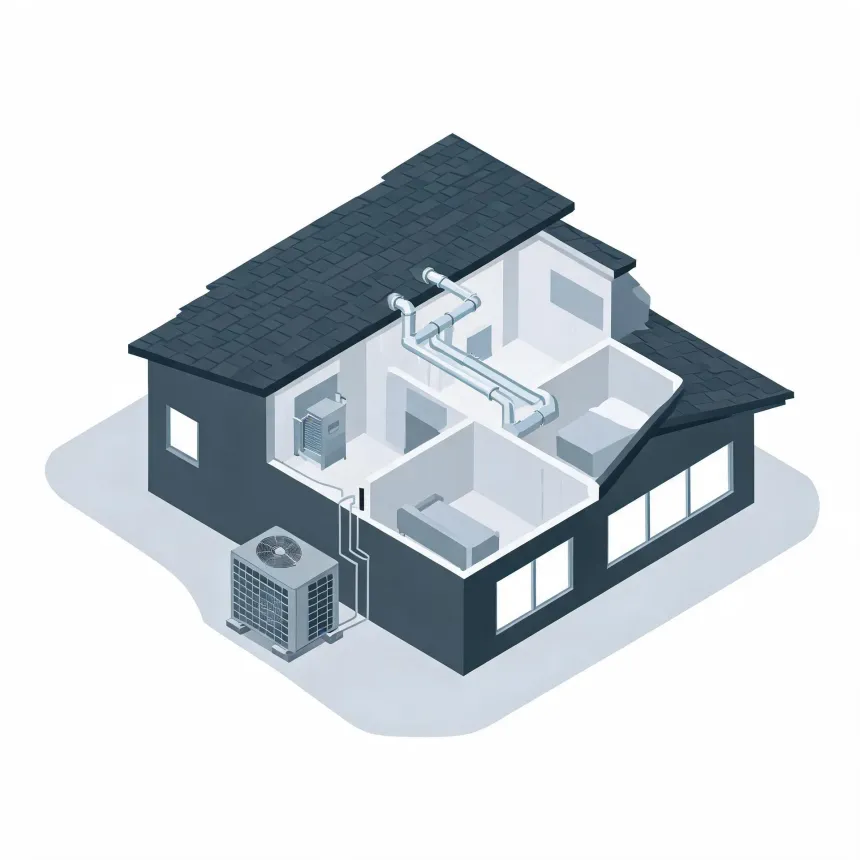
A tune-up before summer checks the parts that carry that load. The refrigerant charge gets checked. The condenser coil gets cleaned so it can shed heat the way it should. Electrical connections get looked over, since months of cycling on and off wear at them. Finding a weak part in spring means it gets fixed before the system has to run flat out for four months straight.
- 4 months
- June through September, your air conditioner is on duty
- 88°F
- the average summer afternoon it cools against
- 15 wind events
- in ten years, and wind drives debris into outdoor units
NOAA nClimDiv, 1991–2020 normals

Book your AC tune-up in May, before homes here start needing cooling in June.
- Jan
- Feb
- Mar
- Apr
- May
- Jun
- Jul
- Aug
- Sep
- Oct
- Nov
- Dec
A tune-up checks the refrigerant charge, cleans the coils, tests the capacitor and tightens the electrical connections.
Arizona requires HVAC contractors to hold a state license.
Arizona licenses HVAC contractors through the Registrar of Contractors, and that license belongs to the contractor, not to any single job. The same license that covers a new install covers a maintenance visit on your air conditioner.
For this job, the license is what stands behind the person in your driveway. If the visit involves opening the refrigerant lines, whoever does that also has to hold EPA Section 608 certification, a separate federal requirement that applies in every state no matter what Arizona licenses.
Sources: Arizona State Legislature · Arizona Registrar of Contractors
- What does AC maintenance include?
- A technician checks refrigerant charge, cleans the condenser coil, and tests the capacitor and contactor in the outdoor unit. Inside, they check the evaporator coil and the condensate drain, since a clogged drain is one of the more common reasons a system stops cooling. They also check the thermostat and airflow, and change or clean the filter if that was not already handled. The point is to catch a weak part before it fails on an 88°F afternoon, not after.
- How often does an air conditioner need maintenance?
- Once a year is the standard, done in spring before the heat sets in. Here in Clifton the system only runs June through September, so a spring check catches anything the winter months let sit, like a dirty coil or a weak capacitor. Getting it done before June means the unit is ready when the heat starts, not part way through it.
- Is AC maintenance worth it?
- Yes, mainly because most AC breakdowns trace back to something small that got missed. A weak capacitor, a dirty coil, a low refrigerant charge, these things build slowly and maintenance catches them before they leave you without cooling. With four months of real heat here and afternoons near 88°F, a system that quits mid-summer is more than an inconvenience. A yearly check is the cheaper way to find a problem, compared to finding it when the unit stops.