Heat Pump Installation in Safford, AZ
A new system here will heat from November through April and cool from May through September every year. Tell us about the house, and a licensed contractor who covers Graham County will get in touch.
Tell us about the job
It takes about a minute.
What Safford asks of a heat pump
Your heat pump works almost all year in Safford. Winter nights average 33°F from December through February, mild enough that a heat pump can carry the heating load without much strain. Summer afternoons average 93°F, and that's the harder test, since the same unit has to pull that heat back out of the house five months straight, May through September.
Eleven months of the year, one machine is doing either the heating or the cooling. A new split-system heat pump has to meet 14.3 SEER2 for cooling and 7.5 HSPF2 for heating, the federal minimum as of January 2023, so it's built to handle both sides of that job.
- 6 months
- November through April, your system heats
- 5 months
- May through September, it cools
- 33°F
- the average winter night it heats against
- 93°F
- the average summer afternoon it cools against
NOAA nClimDiv, 1991–2020 normals
Arizona requires HVAC contractors to hold a state license.
The Registrar of Contractors licenses the contractor, not the individual job. That means the license follows the business across every project it takes on in Arizona, including a heat pump installation, and the state keeps a record of who holds it.
For this job, the license is what stands behind the work. On top of that, most cities and counties in Arizona require a permit for a heat pump installation, along with an inspection once the work is finished. That permit and inspection are separate from the license and come from the local building office, not the state.
Sources: Arizona State Legislature · Arizona Registrar of Contractors
- Is a heat pump better than a furnace?
- It depends on what you want it to do. A heat pump moves heat instead of burning gas to make it, and it cools your home in summer as well, so it replaces both a furnace and an air conditioner with one system. A gas furnace only heats. About half the homes here heat with gas, so this is a real choice for a lot of people, and a contractor can look at your ductwork and current setup to say which one fits your house.
- What's the difference between a heat pump and an air conditioner?
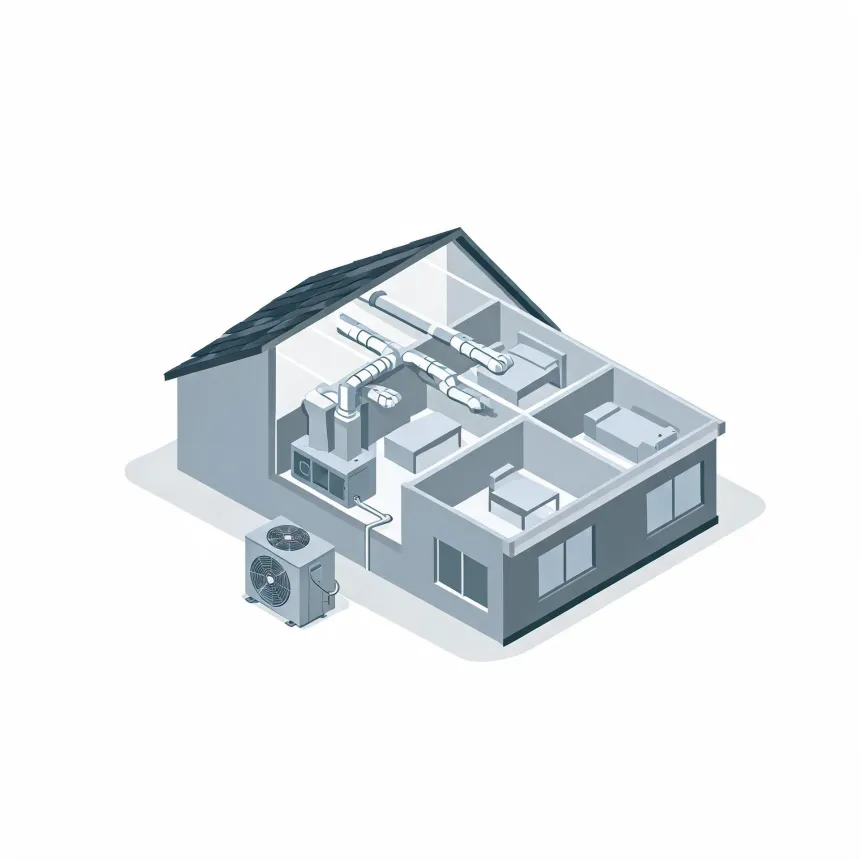
- An air conditioner only cools your home. A heat pump does that same job in summer, pulling heat out of the house and sending it outside, but it can also reverse that process in winter and pull heat from the outside air into the house. That reversing valve is the main difference between the two. Homes here need cooling for 5 months and heat for 6, so a heat pump covers both seasons with one outdoor unit instead of running a furnace alongside a separate air conditioner.
- Does a heat pump work in cold weather?
- Yes. There is still heat energy in outside air even when it feels cold, and a heat pump pulls that heat inside. Heat pumps sold today are built to handle winters like the ones here, where nights average 33°F from December through February. As the temperature drops further, the unit has to work harder and puts out less heat per hour, which is why some homes pair one with a backup heat source for the coldest nights. A contractor can size the system to match what winters here actually demand.