Heat Pump Installation in Maricopa, AZ
A new system here will heat from November through March and cool from April through October every year. Tell us about the house, and a licensed contractor who covers Pinal County will get in touch.
Tell us about the job
It takes about a minute.
A heat pump in Maricopa works almost every month of the year
Your heat pump carries the load twelve months a year here. Summer afternoons average 101°F for seven months, April through October, so the compressor spends long stretches running full out to keep the house at temperature. Then it has to switch jobs and pull heat from 40°F night air for the five months of winter.
That back and forth all year is harder on a unit than a summer-only air conditioner ever sees. A new split-system heat pump has to meet federal minimums of 14.3 SEER2 for cooling and 7.5 HSPF2 for heating, and in a place that leans on it in both directions, sizing it right for your house matters as much as the rating on the label.
- 5 months
- November through March, your system heats
- 7 months
- April through October, it cools
- 40°F
- the average winter night it heats against
- 101°F
- the average summer afternoon it cools against
NOAA nClimDiv, 1991–2020 normals
Arizona requires HVAC contractors to hold a state license.
The Registrar of Contractors issues that license after testing the contractor and it stays on file with the state. It covers the contractor as a whole, not the specific job at your house, so the same license that qualifies someone to install a heat pump also backs the rest of the HVAC work they take on.
For the installation itself, the license is what stands behind the contractor's qualification, but the work still needs a permit from the local building office in most cities and counties, with an inspection once it's done. That inspection is what checks the actual installation at your address, the refrigerant connections and the wiring, separate from whatever the state recorded about the contractor beforehand.
Sources: Arizona State Legislature · Arizona Registrar of Contractors
- Is a heat pump better than a furnace?
- For Maricopa, yes, because a heat pump handles both your heat and your cooling and your winters are mild enough that it never has to work hard to keep up. Winter nights here average 40°F, well within what a heat pump handles without help. A furnace only heats, so you would still need a separate air conditioner for the 7 months a year you run cooling. One system doing both jobs is the simpler setup for this climate.
- What's the difference between a heat pump and an air conditioner?
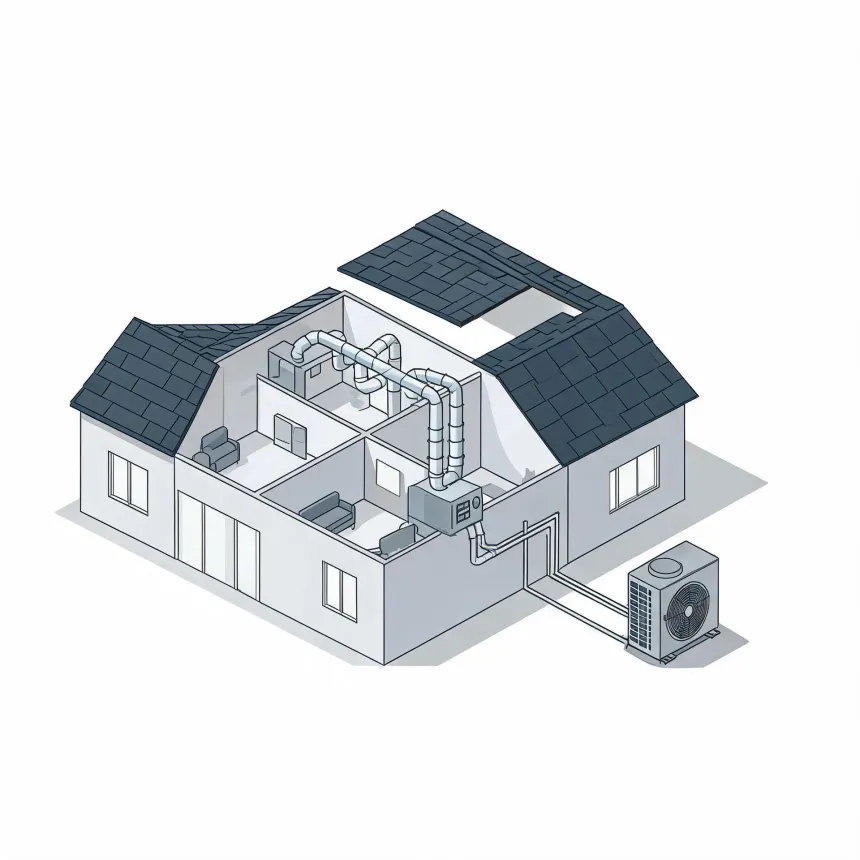
- An air conditioner only moves heat out of your house. A heat pump does that too, but it can also run in reverse and move heat into your house, which is what heats your home in winter. Mechanically the two are close cousins, both use a compressor and refrigerant, but the heat pump has a reversing valve that lets it switch directions. That's why a heat pump can replace both your furnace and your air conditioner.
- Does a heat pump work in cold weather?
- Yes, and in Maricopa it barely gets tested. A heat pump pulls heat from outside air even when that air is cold, it just has to work harder as the temperature drops. Winter nights here average 40°F, which is mild enough that a properly sized heat pump covers your heating without needing backup heat strips. In climates with hard freezes a heat pump loses some efficiency, but that isn't the situation here.