
Why your heat pump bill is high in Arizona summers

RepairHeat PumpArizona
Step 1 of 2

What ZIP code is the job in?

A heat pump in Arizona is doing the hardest version of its job all summer, moving heat out of your house and into air that might already be 105 degrees outside. The hotter it is outdoors, the harder the system has to work to push heat into air that doesn't want to take it, so it runs longer and draws more power to hold the same indoor temperature. If it's running close to nonstop on the hot afternoons, that alone can explain the jump in your bill. A unit that's low on refrigerant, has a dirty outdoor coil, or has a weak capacitor will struggle even more in that heat, running longer still to do the same job, or failing to keep up at all. If your bill is higher than it was last summer, or higher than a neighbor's with a similar house, something is likely making the system work harder than it should have to.

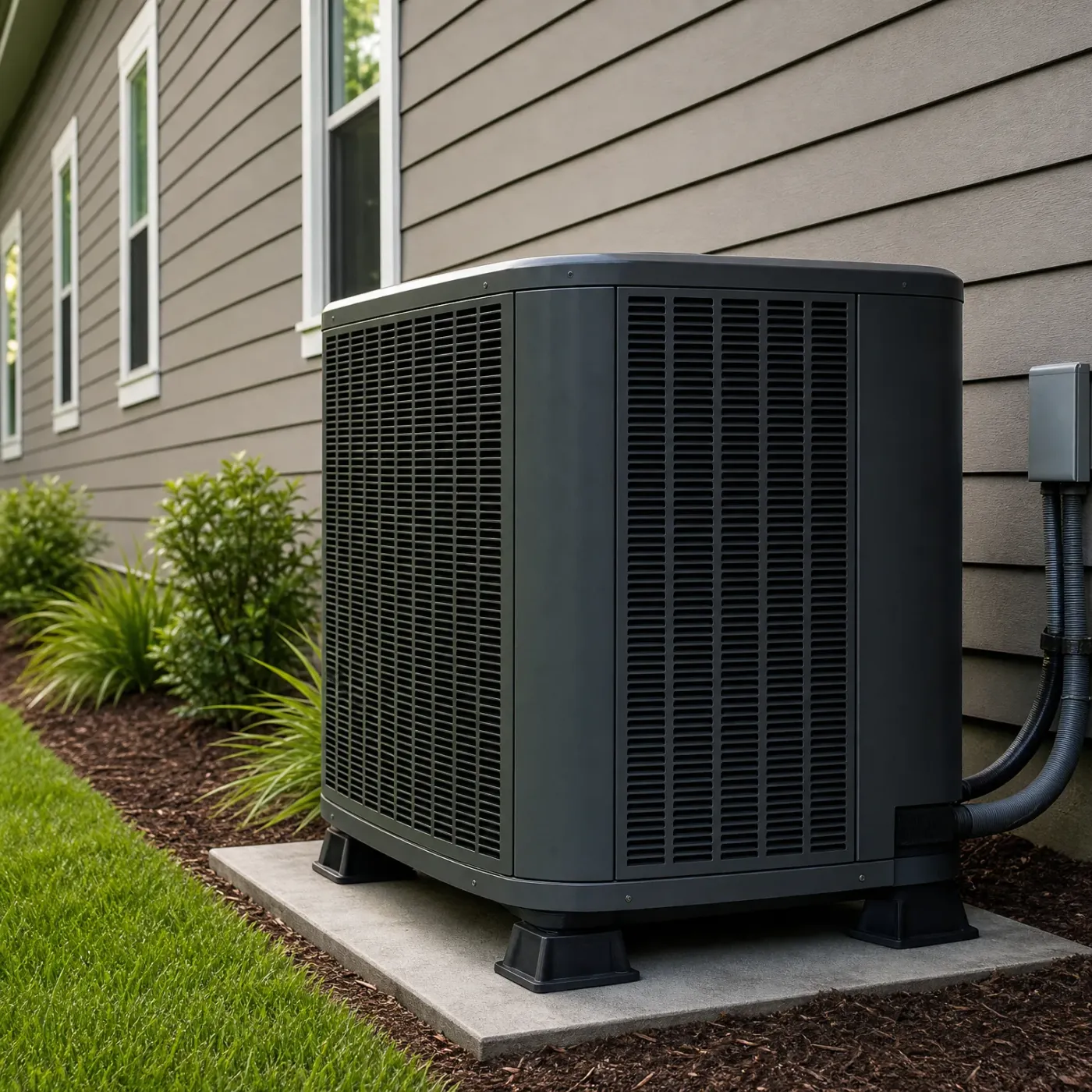
A gray outdoor condenser unit on a concrete pad beside a beige vinyl-sided house, with a wall-mounted disconnect box, flexible conduit, mulch bed, shrubs and a concrete walkway in front.

Running steady, cooling fine

A heat pump that looks like this is working the way it should. The coils are clear, the pad is clean, and the lines running to the disconnect are intact. It can still run hard on a 110 degree day and keep the bill reasonable, because nothing is forcing it to work past what the heat alone demands.


An outdoor air conditioning condenser unit on a concrete pad beside a house with horizontal siding above a brick foundation, with a flexible conduit running to a wall-mounted disconnect box.

Caked in dust, running up your bill

Dust built up like this on the cabinet usually means it's built up on the coil too, where it matters. A coil that can't shed heat properly makes the system run longer to hit the same temperature inside. Longer runtime on every hot day is where the extra cost on your bill comes from.

A woman with long wavy brown hair in a grey ribbed sweater sits on a couch indoors, looking toward a window, with a potted palm-like plant and fireplace behind her.
A woman with long brown hair wearing a green V-neck top and beige cardigan sits on a light sofa, looking off to the side, with a dining table, lamp and framed picture in the background.
A woman with long dark hair in a cream knit sweater sits on a beige sofa indoors, looking toward a bright window with a houseplant and framed picture in the background.
A woman with long dark hair in a green knit sweater sits on a couch indoors, smiling and looking toward a window with a blurred room behind her.

What's Actually Driving That Bill

  • Above 100 degrees outside, a heat pump leans on its backup electric strip heat just to keep the indoor coil from icing over in reverse.
  • That backup heat draws far more power than the compressor alone, and it can kick in more than you'd expect once outdoor temps pass 105.
  • The reversing valve that lets a heat pump cool in summer is also the part most likely to stick or leak refrigerant with this much runtime.
  • A dirty outdoor coil forces the compressor to run longer for the same amount of cooling, and longer runtime is what shows up on the bill.
  • Low refrigerant charge doesn't stop a heat pump from running, it just makes it run constantly while barely cooling the house.
  • The thermostat's setback schedule matters more here than in milder climates, since every degree of recovery costs more when it's 110 outside.

A heat pump cools your house by moving heat outside through the reversing valve and the outdoor coil, and every part of that path gets stressed once Arizona temperatures climb past 100. The compressor has to run longer to move the same amount of heat when the outdoor air is this hot, and longer runtime is the biggest single driver of a high bill. If the outdoor coil has dirt or pollen packed into the fins, the system loses some of its ability to shed that heat, so the compressor runs even longer to make up for it. The reversing valve, the part that switches the system between heating and cooling, takes the most wear during long summer stretches like this and can start sticking or leaking refrigerant. A unit low on refrigerant doesn't shut off or throw an obvious error. It keeps running, pulling power, and barely cooling the house, which is often mistaken for a thermostat problem. And on the hottest days, some systems bring in backup electric strip heat just to manage the indoor coil, a feature meant for winter that draws far more power than the compressor alone when it kicks in during summer. None of these show up by looking at the thermostat. They show up in a repair call, which is the only way to know whether the bill is high because of the heat outside or because something in the system is working harder than it should.

A gray outdoor condenser unit on a concrete pad beside a house with horizontal lap siding, a conduit and disconnect box on the wall, a shrub with white flowers at right and evergreen foliage at left.
A clean, clear unit like this moves heat out of your house without fighting dirt or debris on its way.
A gray outdoor air conditioning condenser unit on a concrete pad beside a house with light vinyl siding, with a gray electrical disconnect box and conduit on the wall to the right.
Fins packed with dust and grime block airflow, so the system runs longer to move the same heat outside.

Your power bill reflects how hard the system is working, not just how long the thermostat has been set. A dirty coil or a charge that's lower than it should be makes the unit run longer to move the same heat outside, and you won't necessarily notice anything except the bill. When outdoor temperatures climb into the hottest stretch of summer, backup strip heat can start cycling more than it should, and that draws far more power than the compressor working on its own. Weak airflow has the same effect, forcing longer runtimes to reach the same indoor temperature. If a room or two never quite matches the thermostat, the system is likely compensating for something it can't correct by running harder. Short cycling, where the unit turns on and off in quick bursts, burns power without actually cooling the house any faster. None of this fixes itself, and a bill that's high one summer tends to repeat the next unless whatever is causing the strain gets addressed.

What's driving your bill up

  • A dirty outdoor coil or a low refrigerant charge can push your bill up without any change in how your house feels.
  • If your heat pump runs most of the day during the hottest stretch of summer, the backup strip heat may be cycling on more than it needs to.
  • A system short on airflow has to run longer to keep up, and that extra runtime shows up directly on your power bill.
  • Rooms that stay warmer than the thermostat setting often mean the system is working harder to make up for a problem it can't fix on its own.
  • A unit that short cycles, turning on and off in quick bursts, wastes power without actually cooling your home any faster.
  • Ignoring a high bill through one summer usually means paying for the same strain again the next.
A gray-haired woman in a cream knit sweater stands in a dimly lit kitchen at night, looking to her right, with a round loaf of bread in the foreground and a dark window and potted plant behind her.
A woman and a sleeping child wrapped together in a cream knitted blanket on a couch, with a potted plant, framed photo and lit lamp in the background.
A dark gray outdoor condenser unit on a concrete pad beside a house with horizontal lap siding, with mulch beds, shrubs, and lawn nearby and conduit running to a wall-mounted box.

A pro who works on heat pumps

Describe what your heat pump is doing once, in one form.

A local pro who knows heat pumps gets your details and gets in touch.

Request a pro

Asking costs nothing, and the choice to hire stays yours.

High Bill: Problem or Just Summer

Runs high for a reason

  • Your thermostat is set at 72 and the system holds it even when it's 112 outside, cycling on strip heat to make up the difference.
  • You haven't had the outdoor coil or refrigerant charge checked in a while, so the system may be working harder than it needs to just to keep the house even.
  • The unit runs most of the afternoon and into the evening without much of a break during the hottest weeks.
  • Rooms that used to feel even now have warm spots, so the system runs longer trying to catch up.
  • The bill jumped well past what it was running the same month last year, with no change in how the house feels.

High bill, nothing wrong

  • The house holds 72 through a 110 degree afternoon without the system struggling or short cycling.
  • Every room feels the same temperature, so the system isn't overworking one zone to compensate for another.
  • The outdoor coil is clear and the pad is clean, so the unit isn't fighting dirt to move heat outside.
  • The bill is higher than spring or fall but tracks close to what it was the same month last summer.
  • The system cycles off between runs instead of staying on for hours straight.
A beige outdoor air conditioning condenser unit on a concrete pad beside a house with horizontal vinyl siding, with refrigerant lines and a disconnect box on the wall, surrounded by dark mulch and a green shrub at left.

Unit running clean

This is what a heat pump should look like outside your house. The pad is clear, the conduit to the disconnect is intact, and nothing is blocking the coil. A unit in this shape still works hard in Arizona heat, but it isn't losing capacity to dirt or a bad connection.

An outdoor air conditioner condenser unit on a concrete pad beside a house with beige horizontal siding, with conduit running from an electrical box on the wall.

Unit under strain

Nothing here looks obviously wrong, and that's the problem. A unit can look fine from the outside while a low charge or a failing part inside makes it run far longer than it should. If your bill jumped and the equipment looks like this, the cause is usually not visible from the yard.

Power costs 15.26 cents per kilowatt-hour statewide

At 15.26 cents per kilowatt-hour, every extra hour your heat pump runs to fight the heat shows up on the bill fast. A system working harder than it should, from a dirty coil or low charge, turns that rate into real money over a summer.

EIA-861 2025 statewide residential average

An outdoor air conditioner condenser unit on a concrete pad beside a house with horizontal vinyl siding, with refrigerant lines and an electrical disconnect box on the wall and dry leaves on the ground.
Before you get your heat pump repair
An outdoor condenser unit on a concrete pad beside a gray lap-sided house, with an electrical disconnect box and conduit on the wall and shrubs with mulch to the right.
After you get your heat pump repair
Single-story house with tan horizontal siding and a dark shingled hip roof, fronted by a patchy green and brown lawn and a concrete walkway leading to the covered entry.

Dry heat still carries some moisture, and in Arizona summers the dew point averages 47°F across June, July and August, which is low. That matters because dry air lets sweat evaporate off your skin fast, so a house can feel comfortable at a slightly higher indoor temperature than it would somewhere humid. A heat pump working against a 47 degree dew point isn't fighting moisture the way a system in a wetter state would. If yours is running long hours and the bill is still climbing, the air itself isn't the reason. Something in the system is making it work harder than this dry heat requires.

NASA POWER T2MDEW county cells weighted by homes

Why does your house feel fine but the bill doesn't

Your thermostat says 72 and the house feels right, so nothing seems wrong. But the unit outside might be running most of the afternoon to hold that number, cycling strip heat on and off to keep up once it's past 105. You wouldn't hear a difference inside. The air coming out of the vents still feels cool. What you'd notice is the outdoor unit running longer stretches than it used to, and the power bill climbing even though you haven't touched the thermostat. If that keeps up through a whole Arizona summer, the compressor and the backup heat strips are both logging more hours than they were built to carry comfortably, and that extra strain is what eventually turns into a repair instead of just a high bill.

An outdoor heat pump unit on a concrete pad beside a house corner, with a small electrical box and conduit on the wall, gravel border, grass, and a plain light-colored wall filling the right side.

Chasing it down yourself

Figuring out why your heat pump bill is high usually means pulling it apart on your own first. You check the thermostat settings, look up what a normal bill should run, maybe climb outside and look at the unit. If nothing's obvious, you start searching for a contractor, calling a few, explaining the same thing about your system and your bill to each one, then waiting to see who calls back and comparing what they quote.

A grey outdoor heat pump unit on a concrete pad beside a white stucco wall and dark siding with a downpipe, with gravel and grass in the foreground.

Getting matched instead

You answer a few questions about your heat pump and what your bill has been doing, and a contractor who handles this in your area reaches out to you directly. You skip the round of calls and the repeated explaining. The contractor still has to look at your system to know what's driving the bill, but you're not the one tracking down who's available or sorting through quotes to find out.

A smiling man in a denim shirt and white t-shirt stands in an open dark doorway of a stucco house, facing a woman with long brown hair and a green jacket seen from behind in the foreground.

A high bill is a signal, not a mystery

Your heat pump works harder in Arizona summers than it would almost anywhere else, and a high bill usually means something specific is making that work harder than it needs to be. A dirty coil, a low charge, strip heat cycling more than it should. Those are things a contractor can check and most of the time fix.

You don't have to figure out which one it is before you get help. You could spend an afternoon searching for someone to call, explaining the bill and the thermostat setting and what the unit sounds like, then doing it again with the next contractor to compare what they quote you. Or you can skip that and get matched with a contractor who takes on exactly this kind of problem, who will reach out to you directly once you're matched.

Interior corner of a room with a window and sheer curtain at left, a gray upholstered sofa with a cushion at right, and a round wooden table holding stacked books and a round vase with an olive branch.
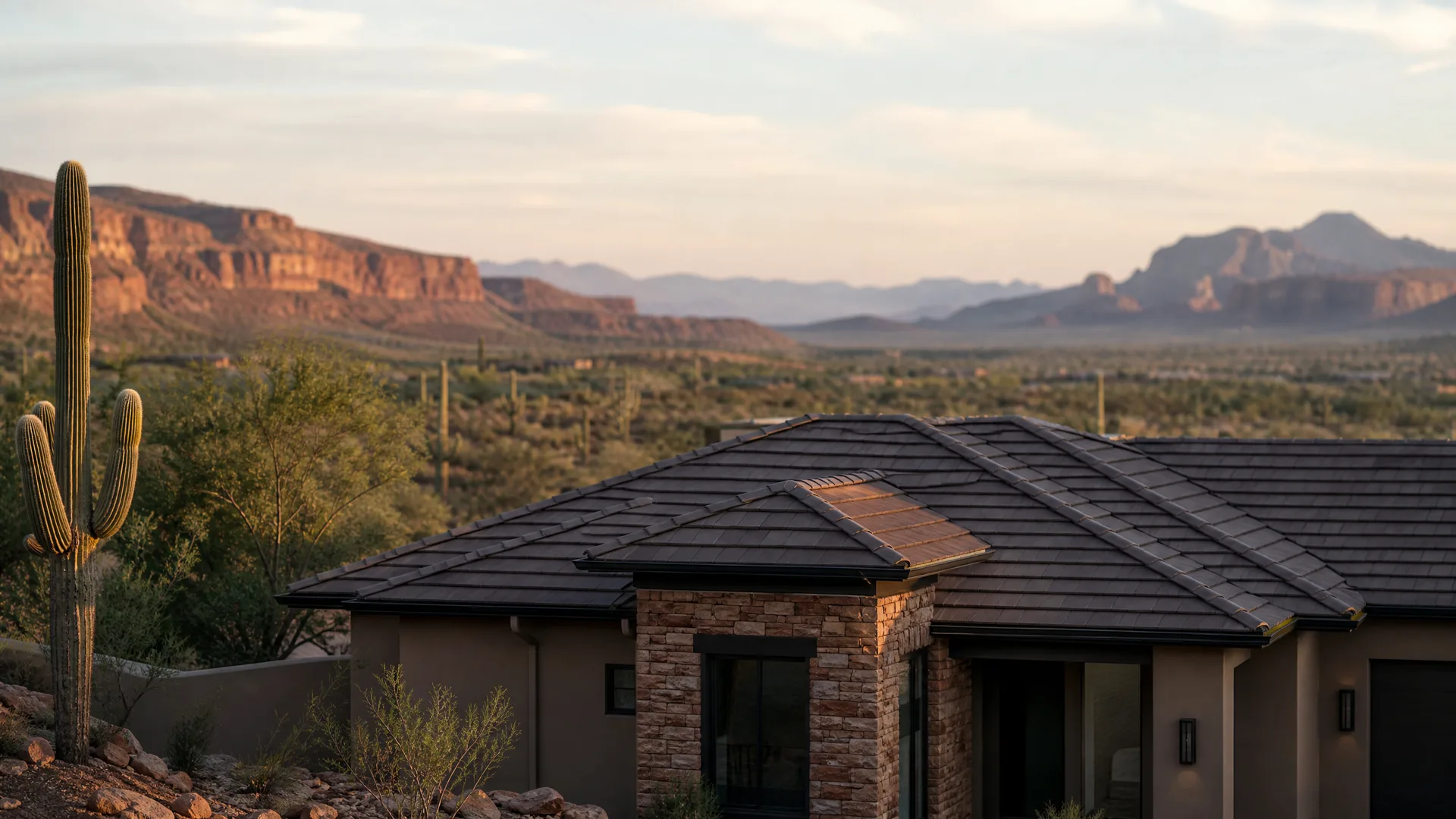
A single-story house with a dark tile hip roof, stucco walls and stone-clad entry, with a saguaro cactus in the left foreground and desert hills and mountains in the background.

Get your heat pump to the right pro

Start one form

No fee to send it, and nothing to sign.

Finding out what's driving your bill on your own means checking the unit, searching for a contractor, calling a few, and explaining the same problem each time. Send the request once and a contractor who handles heat pump repair in Arizona reaches out to you directly.