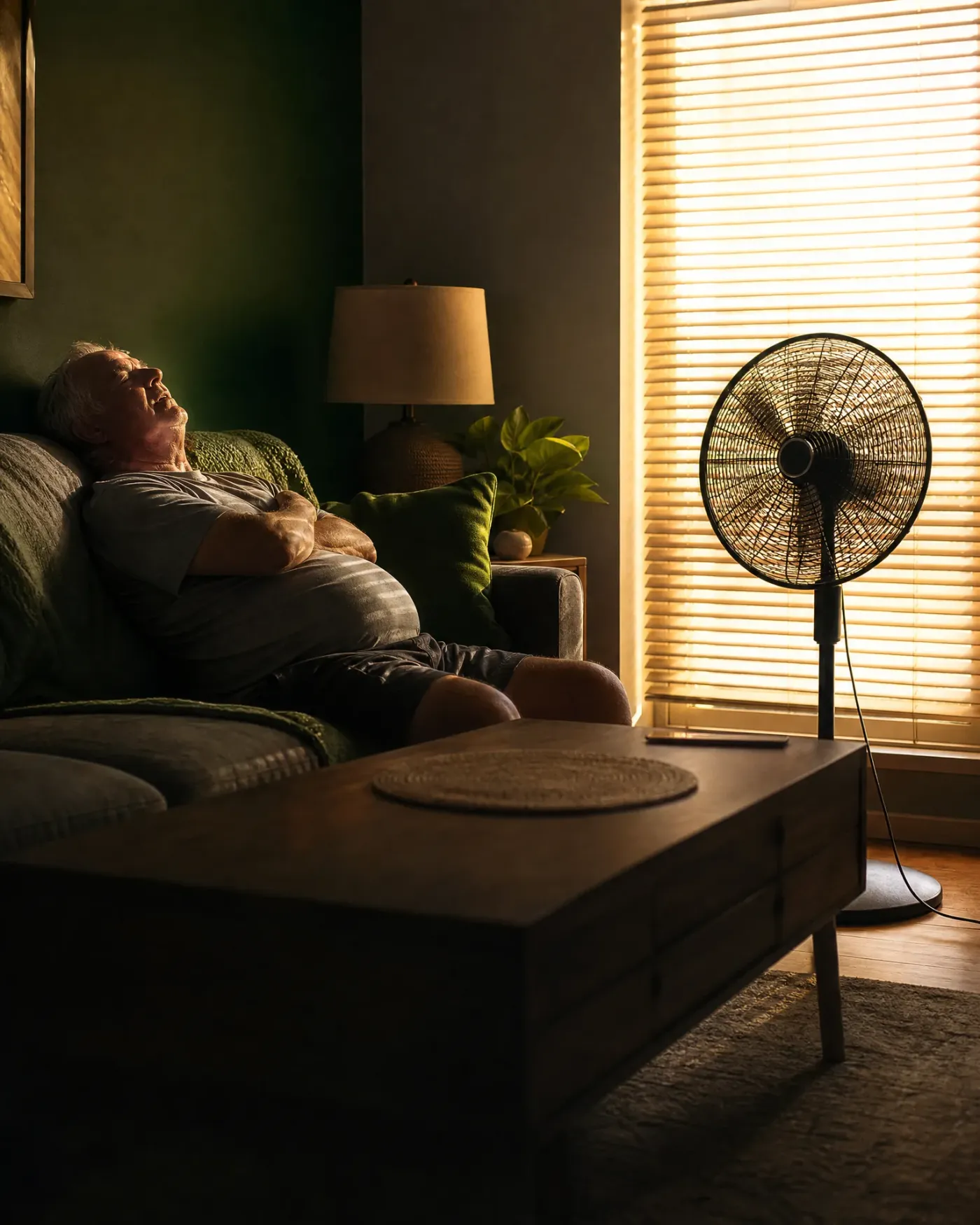
Switching the way it should
This is a heat pump doing its job. You set it to cool, the reversing valve shifts, and cold air comes out the vents within a few minutes. No hesitation, no guessing which mode you'll get.
In Arizona, a heat pump has no business running heat in the summer. If yours is stuck on heat when you need cool air, that's not a settings mistake you're missing. Something in the system isn't switching over, and with outdoor temperatures what they are here, that's not a problem that waits.
The reversing valve is what sends refrigerant one way for heat and the other way for cool. When it sticks in the heat position, the thermostat can tell the system to cool all it wants and nothing changes. A bad valve solenoid, a stuck valve body, or low refrigerant can all cause this. Sometimes it's simpler, a thermostat wired wrong or set to the wrong mode. Either way, this isn't something to leave alone through an Arizona summer. A system that won't cool is a system doing you no good at all when it's over 100 outside, and running it in the wrong mode can put more strain on parts that were never built for backward duty this long.

This is a heat pump doing its job. You set it to cool, the reversing valve shifts, and cold air comes out the vents within a few minutes. No hesitation, no guessing which mode you'll get.

This one won't let go of heat mode no matter what the thermostat says. An aging reversing valve or a failed control board usually causes it, and in Arizona heat, that's not something to wait on.
Thermostat signals the reversing valve solenoid to energize
Solenoid should shift a sliding valve inside the reversing valve
That shift redirects refrigerant flow through the coils
Indoor coil switches from releasing heat to absorbing it




A heat pump that won't leave heat mode in July isn't a small thing to live with here. The house keeps warming, the system keeps fighting itself, and you're stuck checking the thermostat every hour hoping something changes on its own. It won't. The reversing valve or its solenoid needs to be tested with equipment you don't have in a drawer somewhere, and guessing at it only burns time you don't have when it's 105 outside. A contractor who works on heat pumps around Arizona all year has seen this exact failure plenty of times and knows what to check first. Send the request and that search becomes someone else's job instead of yours. One local contractor gets your information, not a handful of companies competing for your callback, so you're not stuck fielding calls while your house sits warm. That part is off your plate the moment you hit the button.
A stuck reversing valve doesn't announce itself with a strange noise or a burning smell. It shows up as a house that won't cool down no matter what the thermostat says. You'll feel it first in the rooms farthest from the air handler, the ones that run warm even when everything seems to be running. Set the thermostat to 72 and watch it climb past 80 instead, because the indoor coil is doing the opposite of what you asked it to do. The compressor outside doesn't know the difference. It draws the same current, runs the same cycle, whether the valve sends that effort toward heating the house or cooling it. So the unit keeps working, the electric meter keeps turning, and the house keeps getting warmer instead of cooler. That's the part that catches people off guard here. It isn't a system that shut down and stopped costing you anything. It's a system running full tilt, pulling full power, and making things worse the whole time. There's no setting on the thermostat that gets around a valve that's physically stuck. Lowering the temperature further just asks a broken system to try harder at the wrong job. The fix is mechanical, inside the unit, not on the wall. Until a contractor gets eyes on the reversing valve and the solenoid that drives it, the house keeps heating up and the bill keeps climbing with it.





Arizona air is dry, but summer humidity still averages a 47°F dew point across June, July and August, according to NOAA climate data for the state. That is low next to the Gulf states, but it is not zero, and a reversing valve that is already stuck has no margin for the moisture that is there. The indoor coil is supposed to pull that moisture out along with the heat. Stuck on heat mode, it is doing neither. You will notice it less as a clammy feeling and more as a house that will not cool and air that never quite feels dry, even with the thermostat set low and the system running the whole time.
NASA POWER T2MDEW county cells weighted by homes
A heat pump that won't shift out of heat mode has a stuck or failed reversing valve, or a solenoid that isn't getting the signal to move it. That's the answer, and it doesn't change whether you check the thermostat again or not. What changes things is someone opening up the outdoor unit and testing the valve itself. A local contractor who services heat pumps through an Arizona summer sees this exact failure often enough to know where to look first, and your request goes to one licensed contractor, not a handful of companies competing for the job. No second-guessing which crew is showing up or fielding calls from three different numbers. You'll know who's coming and what they work on. The house stays warm until that valve gets checked or replaced, and nothing about that changes on its own. Once the request is in, the work of tracking someone down is off your plate. The fix from here is mechanical, not a matter of waiting out the thermostat.

Your request stays with one local pro.
No charge to send it. You decide if you hire them.