How to lower your heating bill in an Arizona winter

One request and the search for a pro is handled.

Tune-up, service, or cleaningFurnace or heatingArizona
Step 1 of 2

What ZIP code is the job in?

Your heating bill in Arizona runs high in winter mostly because the furnace is working against a lot of small losses, not because gas or power costs more here. A dirty flame sensor, a clogged filter, or a blower running longer than it should to make up for weak airflow all make the furnace run longer to hit the same temperature. Furnaces here often sit idle most of the year, through a long hot summer, and that idle time lets dust settle and parts seize up slightly before winter asks anything of them. A furnace that starts up strained in November keeps burning extra through every month you run it. Most of what drives the bill up is mechanical, not seasonal, which means it's fixable. A furnace checked and cleaned before it has to work hard tends to hold its bill steady through the winter instead of climbing month over month.

A gray gas furnace stands on a concrete basement floor, connected to sheet-metal ductwork, white PVC vent pipes, and a yellow gas line, with plastic sheeting covering the walls.

Furnace running clean

A clean burn and a clear filter mean the blower reaches your set temperature and shuts off. The flame sensor reads right, the heat exchanger warms up and cools down the way it should, and the gas you pay for turns into heat in your rooms instead of a longer run time.

A metal furnace with louvered panels stands against a concrete basement wall, connected to sheet-metal ductwork and a round flue pipe, with wooden framing posts and a pipe nearby.

Furnace running dirty

Dust on the burners and a sensor that misreads make the furnace short cycle or run long to hit the same temperature. It still heats your house, but it burns more gas doing it, and the extra strain is what shows up on the bill before it shows up as a breakdown.

Why does my furnace run longer than it used to?

Why does my furnace run longer than it used to?

A dirty flame sensor or a clogged filter is making it work harder

The flame sensor is a thin metal rod that sits in the burner flame and tells the furnace the gas is actually lit. Once it picks up a layer of residue, it reads the flame weaker than it is, and the control board shortens the burn or cycles the burner on and off trying to compensate. A clogged filter does something similar from the other end. It slows the air moving across the heat exchanger, so the blower has to run longer to push your house up to the temperature on the thermostat. Either one on its own adds runtime. Together, they can keep the furnace going well past when it used to shut off.

  1. Cold air pulls into the furnace through the return duct and filter.

  2. The gas valve opens and the igniter lights the burners.

  3. The flame sensor confirms a steady flame within seconds.

  4. The heat exchanger warms as the burner runs.

A gray high-efficiency furnace in a basement with sheet-metal ductwork, white PVC vent pipes, metal plumbing lines, a condensate pump on the floor, and a window showing green trees outside.
The filter is clear and the flame burns steady, so the furnace reaches your set temperature and stops.
An older metal furnace with PVC and metal pipes stands on a concrete basement floor beside galvanized ductwork, with wooden stairs and a water tank in the background.
Dust on the burners and a weak flame sensor keep the blower running longer to make up the difference.
A smiling man in a navy long-sleeve shirt sits at a wooden table in a kitchen and dining area, with a ceramic mug, a potted plant, and a sliding glass door behind him.
A smiling bearded man in a green henley shirt stands at a kitchen island with a gray mug, looking off to the side, with a dining area and shelves blurred behind him.
A smiling bearded man in a navy sweater sits at a white kitchen island with a ceramic mug, with open shelves, potted plants and a range hood behind him.
A smiling man in a dark olive long-sleeve shirt sits in a kitchen beside a counter with a dark mug, with a dining table, sideboard and hallway visible in the blurred background.

Is your furnace running almost the whole time now?

You turn the thermostat down and the blower still kicks on again ten minutes later. Vents that used to blow warm now feel lukewarm after a while. You might hear a click or two before the burners catch, where it used to light right away. The furnace closet smells a little like burnt dust when it first starts up each morning. None of this means the unit is failing. It usually means something small, dust on a sensor, a filter that hasn't been changed, is making the furnace work harder for the same heat. Left alone through a full winter, that extra run time shows up on your power bill, and it puts more wear on a blower motor than it should see in one season.

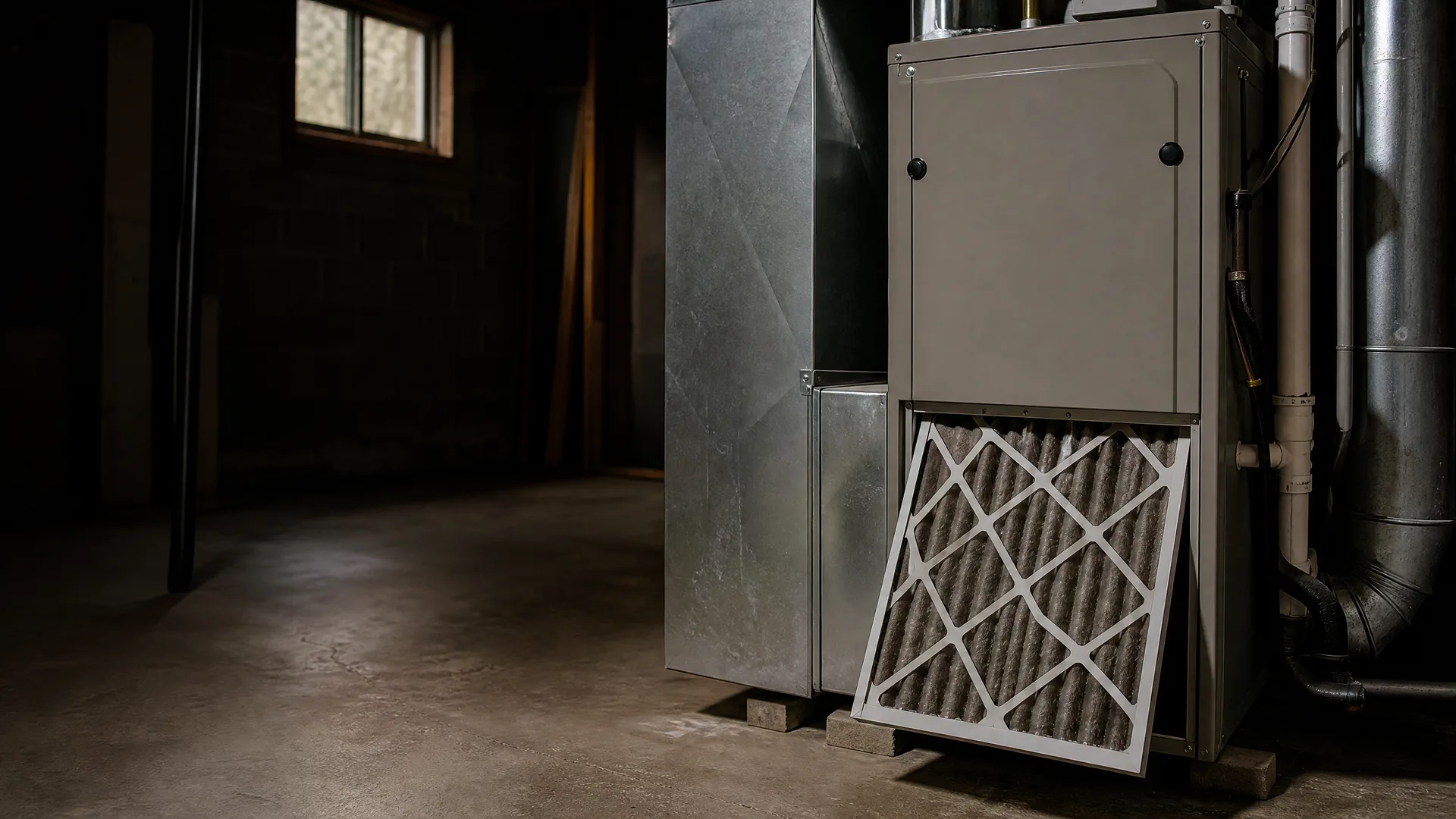
A gray furnace with sheet-metal ductwork in a dim basement, with a dirty pleated air filter leaning against its base on a concrete floor.

It's the middle of January, around four in the afternoon, and the light coming through the garage window is already turning orange. You've pulled the filter out to check it, and you're holding it up against the window, and almost none of the light comes through. Behind it the furnace is running, the blower steady and low, and it's been running since before lunch. You can feel the warm air still coming out of the vent near the garage door, but it's not the dry, strong heat you remember from last winter. You set the filter on top of the furnace and stand there a second, listening to it work.


Send one request and you're done looking

A licensed local pro takes the request for your furnace tune-up.

There's no charge for the request.

A basement utility area with a gray furnace, sheet-metal ductwork, pipes, plastic-covered walls, a concrete floor, and a black shelving unit holding storage bins.

The burner section stays clean and dry

The cabinet shows no rust and the vents sit open and clear. Gas lines and condensate pipes run straight to the furnace with no sign of corrosion. A furnace kept clean like this burns gas efficiently, and the blower shuts off when it should.

A gray metal furnace with louvered vent panels stands on a concrete basement floor beside galvanized ductwork, gas and plastic pipes, and foil-faced insulation along the ceiling and wall.

Rust on the cabinet means heat is leaking out somewhere

Surface rust on an older furnace often points to moisture that built up near the burners or vents over time. A unit in this condition tends to run longer to hit the same temperature, and that shows up on your bill.

A smiling man in a dark blue T-shirt sits on a light gray sofa in a living room with a wooden shelf and window behind him, with a laptop edge visible in the foreground.
A bearded man in a plaid flannel shirt stands indoors looking out a frost-covered window, with a steaming dark blue mug on the wooden sill and snow-covered trees outside.
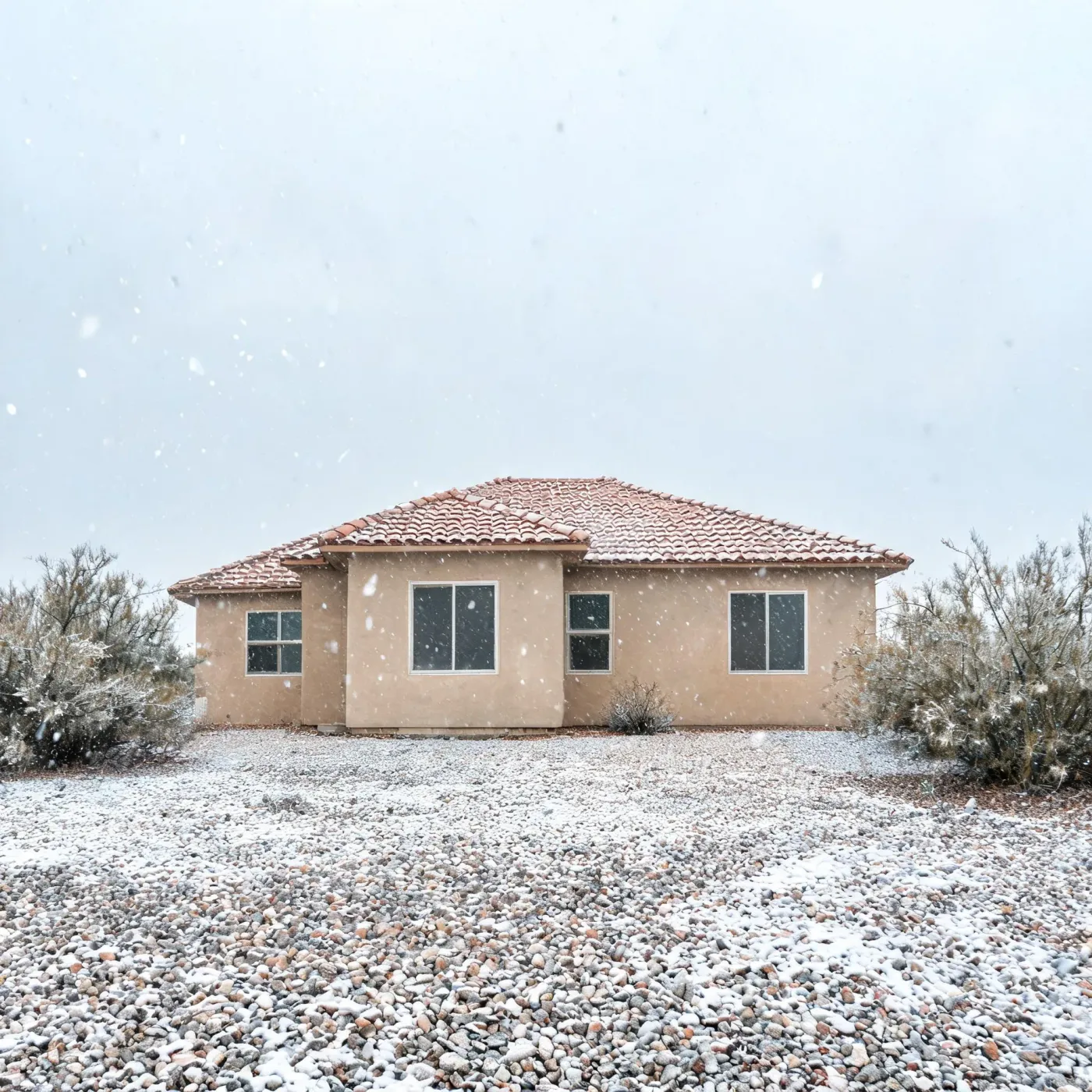
A single-story tan stucco house with a red tile hipped roof during falling snow, surrounded by light snow-dusted gravel ground and desert shrubs under a pale overcast sky.

Winter nights across Arizona average 39°F, according to NOAA climate data, and your furnace is built around that number. It cycles on in the evening, runs until the house hits your set temperature, then shuts off, over and over through the night. A furnace in good shape handles that without trouble. One with a dirty flame sensor or a clogged filter has to stay on longer each time to push the same amount of heat through, and that shows up as a blower you hear running well past when it used to stop, and a bill that reflects all those extra minutes added up across the season.

NOAA nClimDiv 1991-2020 county normals weighted by homes

A beige furnace with two access panels stands against a concrete basement wall, with galvanized sheet-metal ductwork, a white PVC pipe, flexible conduit and insulated ducting around it.
Before you get your furnace maintenance
A gray furnace with white PVC vent pipes stands beside sheet-metal ductwork in a basement with a smooth concrete floor, exposed wood framing, and plastic sheeting on the walls.
After you get your furnace maintenance

What a tune-up actually checks

A maintenance visit on your furnace covers the parts that cause most of the waste. The flame sensor gets cleaned so it reads the flame correctly instead of shutting the burners down early or letting them run dirty. The filter gets checked and swapped if it's clogged. The burners get a look for soot or uneven flame, and the blower motor gets checked for the amp draw it should have. None of this is guesswork. A contractor who works on furnaces all winter knows which of these usually goes first in a system that's starting to run long, and checks it before it turns into a bigger repair.

Why catching it early matters

A furnace with a dirty flame sensor or a weak flame doesn't just run longer, it runs that way every single cycle until someone fixes it. Over a winter of nights near 39°F, that adds up to a lot of extra run time on parts that were never designed to work that hard. Left alone, a flame sensor that's barely reading right can fail outright, and a blower that's compensating for a dirty filter wears down faster than it should. Catching it at maintenance, before the furnace is struggling, costs you one visit instead of a breakdown in the middle of a cold night.

Winter nights average 39°F statewide

39°F is mild, but it's also right at the point where your furnace has to cycle on and off most of the night instead of running once and holding steady. Every one of those restarts leans on the igniter and flame sensor, and a dirty one makes each cycle run longer than it needs to.

NOAA nClimDiv 1991-2020 county normals weighted by homes

Where this leaves you

  • A furnace that's clean and reading its flame sensor right cycles on, reaches your set temperature, and shuts off instead of running long.
  • The fixes that matter most are small: a sensor wiped clean, a filter swapped out, a burner free of dust.
  • A local contractor who services furnaces all winter has seen which part usually fails first in homes around you.
  • Sending one request means one contractor calls, not a handful, and you're not fielding competing quotes.
  • Once you send the request, finding someone to do the work is off your plate.

Your furnace doesn't need to run long and hard to keep your house warm through an Arizona winter. It needs to light clean, read the flame right, and shut off once the house hits your set temperature. Everything the facts above point to comes down to that: a sensor, a filter, a burner free of dust, checked before they turn into longer cycles and a higher bill.

That's the kind of work a maintenance visit covers, and it's worth having someone who already knows furnaces in homes like yours do it. A contractor who services this equipment every winter has seen which part tends to go first in the houses around you, whether that's a sensor that reads slow or a filter that clogs faster than most. That's not guesswork on their end. It's what they run into season after season.

Send one request and one contractor calls, not three or four competing for the job. You won't be comparing quotes or explaining your furnace twice to different companies. You tell them what you're seeing, they know the equipment, and the work gets scheduled.

From here, finding that contractor isn't something you have to do yourself. You've already got the picture: what's likely driving the bill up, and what a tune-up actually fixes. The next step is just putting your furnace in front of someone who deals with this make and model all winter long.

A dark wood cabinet with a paneled door and a ceramic pot of green foliage on top stands in a beige-walled room with white baseboard, a window at left, hardwood floor, and a patterned area rug.
A dark wood glass-front cabinet holding folded towels, woven baskets and a ceramic vase stands in a bathroom corner beside a window, with a potted fern and stacked towels on top and a freestanding tub partly visible at left.
A woven basket holding a green cushion and a cream fringed knit throw sits on a wood floor in a room corner beside a window and a dark wooden cabinet.
Corner of a room with a dark wood cabinet topped by a round vase, a linen curtain at a window, white baseboard, oak plank flooring with sunlight patches, and a woven jute rug in the foreground.
A dark wood sideboard against a pale wall holds a shallow stone bowl and a round ceramic vase with leafy branches, with sunlight from a curtained window falling across the wall, wood floor and woven rug.

Finding a pro stops being your job

Your request goes to one pro, not a list of companies.

Find a local pro

You only hire the pro if you want to.