Heat Pump Repair in Yuma, AZ
Homes here need heat from December through February and cooling from April through October. If your system quits, tell us what it's doing and a licensed contractor who covers Yuma County will get in touch.
Tell us about the job
It takes about a minute.
Ten months of work a year, in the harder direction
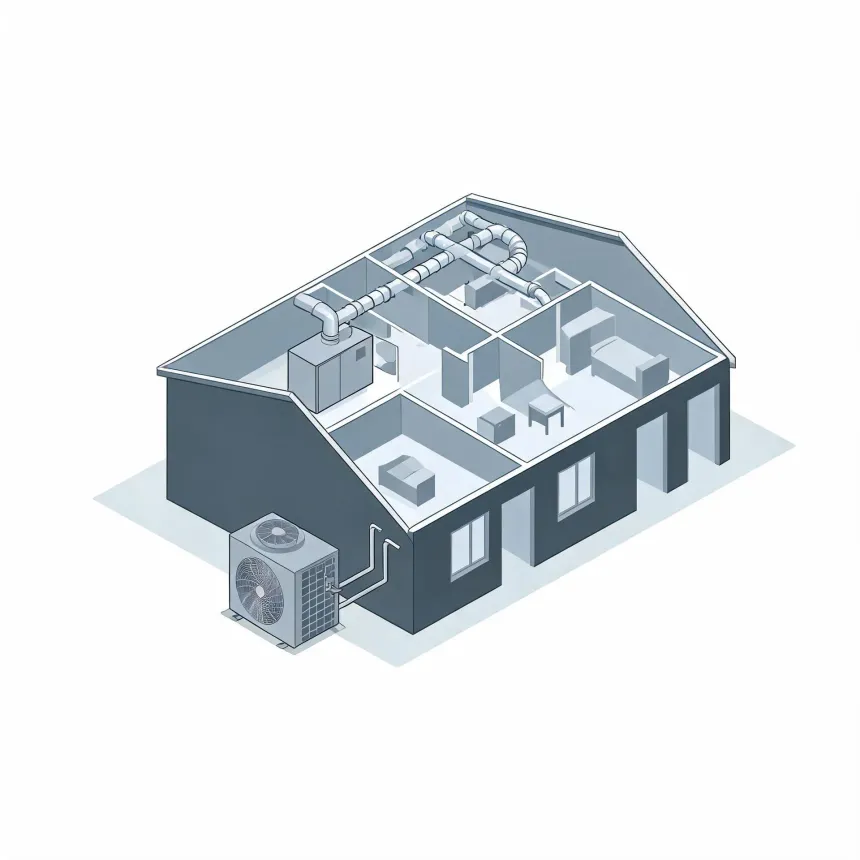
Your heat pump runs almost year round here, cooling for seven months and heating for three. Summer afternoons average 105°F, and that is when the system works hardest, pushing heat out of the house against that kind of outside air. The compressor carries that load all afternoon, day after day, from April through October.
Winter asks less of it by comparison, with nights averaging 43°F, but the same unit still has to switch over and pull what heat it can from the outside air. That switch is handled by the reversing valve, and it is worn by the sheer number of times it has to change the system's direction over ten months of use. With most homes here heating with electricity, a heat pump that fails leaves few other ways to stay warm.
- 3 months
- December through February, your system heats
- 7 months
- April through October, it cools
- 43°F
- the average winter night it heats against
- 105°F
- the average summer afternoon it cools against
NOAA nClimDiv, 1991–2020 normals
Arizona requires HVAC contractors to hold a state license.
The Arizona Registrar of Contractors issues this license to the contractor as a business, not to any single job, so the same license covers this repair and whatever work comes after it.
A heat pump repair means opening the refrigerant side of the system, and federal law requires whoever does that to hold EPA Section 608 certification, no matter what state they work in. Alongside the state license, that certification is what confirms the person handling the refrigerant is qualified to do it.
Sources: Arizona State Legislature · Arizona Registrar of Contractors
- Why is my heat pump blowing cold air?
- In cooling mode this is normal. If you want heat and cold air is coming out, the system may be stuck in defrost, low on refrigerant, or the reversing valve may not be switching over. A frozen outdoor coil that has not cleared yet will also do this. A contractor can check the reversing valve and refrigerant charge to find which one it is.
- Why is there ice on my heat pump?
- Some frost on the outdoor unit during a defrost cycle is normal, especially on cold nights, and it should clear on its own within an hour or so. Ice that stays or keeps building means the defrost cycle isn't running right, airflow across the coil is blocked, or the refrigerant charge is off. Check that the outdoor unit isn't crowded by plants or debris. If the ice doesn't clear, have a contractor look at the defrost control and refrigerant level.
- Why is my heat pump running but not cooling?
- This usually points to low refrigerant, a blocked outdoor coil, or a compressor that isn't doing its job. Check the air filter first, since a clogged one starves the system of airflow and it will run without cooling much. Also check that the outdoor unit's coil is clear of dirt and debris, which matters more here with afternoons hitting 105°F all summer. If the filter and coil are clean and it's still not cooling, the refrigerant charge or the compressor needs a contractor's look.