
AC Repair in Flagstaff, AZ
Air conditioners here run from June through August. If yours quits, tell us what it's doing and a licensed contractor who covers Coconino County will get in touch.
Tell us about the job
It takes about a minute.

Three months of hard running, plus hail and wind
Your air conditioner in Flagstaff only gets a short window of real work, June through August, but those afternoons average 88°F and the unit has to run through most of them. Short seasons don't mean easy ones. A system that sits idle much of the year and then has to carry full afternoons of heat can struggle at the start of summer, especially if it wasn't checked before the first hot stretch.
Coconino County has also logged 32 hail events and 146 damaging wind events over the past ten years, with hail up to 2.5 inches. That kind of storm bends fins on the outdoor coil and can crack the fan blade or knock the unit out of alignment. After a storm like that, you might notice weaker airflow, a new rattle, or the outside unit running but not cooling like it should.
- 3 months
- June through August, your air conditioner is on duty
- 88°F
- the average summer afternoon it cools against
- 32 hail events
- in ten years, and hail bends the fins on outdoor coils
- 146 wind events
- in ten years, and wind drives debris into outdoor units
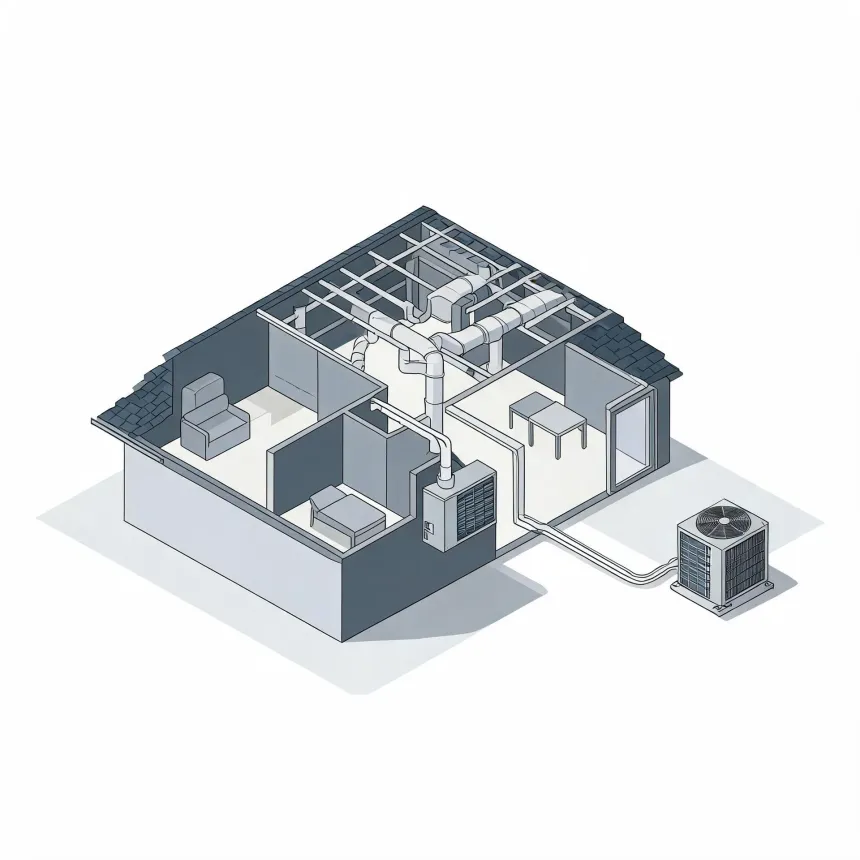
NOAA nClimDiv, 1991–2020 normals

A new air conditioner would save little on running costs in Coconino County, so the repair decision comes down to the unit's condition.
Estimates for a typical Coconino County home, compared with an older unit built to the previous federal minimum, from EIA household energy data, Arizona fuel prices and NOAA climate normals. Your home will differ.
Repair makes sense when a part like a capacitor or contactor has failed.
Replacement makes sense when the compressor has failed or the system uses R-22 refrigerant, which is no longer made.
Arizona requires HVAC contractors to hold a state license.
The Registrar of Contractors tests contractors before issuing a license and keeps a record of who holds one. That license belongs to the contractor, not to any single job, so it does not get reissued or rechecked each time a repair is done. It tells you the contractor met the state's standard and is on file with the state.
For a repair on your air conditioner, the part of the job that involves refrigerant falls under a separate rule that applies everywhere in the country. Anyone who opens the refrigerant side of the system has to hold EPA Section 608 certification, which is a federal requirement, not a state one. In Arizona, the contractor doing the work is expected to hold both the state license and that federal certification.
Sources: Arizona State Legislature · Arizona Registrar of Contractors
- Why is my AC not blowing cold air?
- The most common cause is a dirty air filter choking off airflow across the coil, so check that first since it is the easiest to fix. Low refrigerant from a leak is another common cause, and that one needs a contractor since refrigerant has to be recovered and the leak found and sealed. A failing compressor will also leave you with warm air, usually along with the outdoor unit running but not cooling. With Flagstaff summer afternoons hitting 88°F, a system that is low on refrigerant or short on airflow will struggle most during those peak hours.
- Why is my AC leaking water?
- Most water on the floor near your indoor unit comes from a clogged condensate drain line, which backs up and overflows instead of draining outside. Algae and dust build up in that line over time and block it. A dirty air filter can also cause this indirectly, since restricted airflow lets the coil ice over, and the water shows up when that ice melts faster than the drain can handle. Either way, a contractor needs to clear the line and check the coil to stop it from happening again.
- Why won't my AC turn on?
- Start with your thermostat, since dead batteries or a tripped breaker are the most common reasons a system won't start at all. If the thermostat has power and the breaker is fine, the capacitor that starts the compressor and fan motor may have failed, which is a common point of failure in outdoor units that sit through Flagstaff's hail and wind. With 32 hail events and 146 damaging wind events recorded here over the past ten years, it is also worth having a contractor check the outdoor unit for storm damage if it has been sitting unused. A contractor can test the electrical components and tell you which one needs replacing.